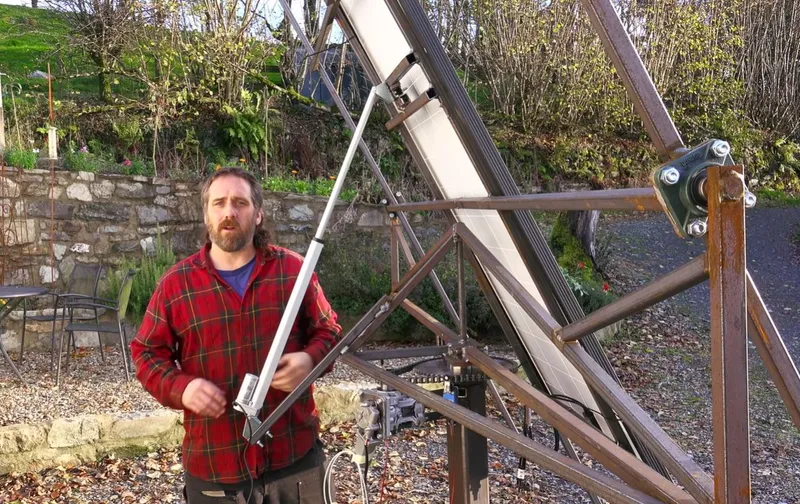
Making an Affordable Two-Axis Solar Tracker
A DIY two-axis solar tracker built with simple steel components and basic electronics can increase energy generation by 30-50% compared to stationary panels, according to recent testing.
Setting up a photovoltaic panel is simple, but you lose significant potential power if merely bolted into place. A solar tracker follows the sun throughout the day, adjusting the panel's angle to optimize sunlight absorption. Greenhill Forge's two-axis tracker demonstrates how to build such a system using affordable materials and straightforward electronics.
Budget-Friendly Design
Commercial solar trackers typically use expensive slewing bearings to support heavy structures. Greenhill Forge opted for a more economical solution by using a trailer axle hub as the foundation. The array's structure, built with welded steel, includes a drive sprocket and can be easily removed for maintenance.
The second axis pivots around two bearings, with the azimuth axis driven by a large geared electric motor and the second axis by a linear motor with a worm gear. This configuration maintains position stability even during power outages or windy conditions.
Smart Electronics
Although you have to subtract the power needed to run the system and the two motors, it does make a convincing argument for maximizing the output of these panels with some fairly basic parts.
The tracker's electronics include a wind sensor and a quad photoresistor-based light sensor to guide movement. Limit switches prevent the system from moving to positions that could cause mechanical damage. Testing showed the tracker generated 30-50% more energy than a stationary identical panel over two days.
Related
