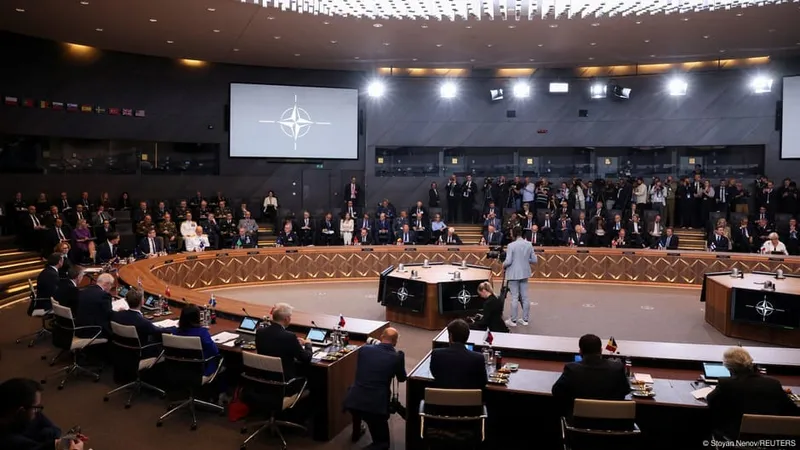
Back to 1997: Russia wants NATO to roll back its eastern expansion
During Ukraine war talks in Abu Dhabi, Russia presented demands calling for NATO to withdraw troops and bases to their 1997 locations, before the alliance's eastern expansion.
The document, dated November 10, reportedly calls not only for an end to Western arms deliveries to Ukraine but also for NATO to withdraw its troops and bases and move them back to where they were in 1997. This refers to the alliance before its first eastward expansion when NATO had 16 members.
Eastern European rejection
The demands have been met with strong rejection from Eastern European NATO members. Polish Prime Minister Donald Tusk stated: 'Under no circumstances will we allow anyone to establish new security rules for this part of the world over the heads of Poland and Europe.'
Under no circumstances will we allow anyone to establish new security rules for this part of the world over the heads of Poland and Europe.
Bulgarian Prime Minister Rumen Radev called a NATO withdrawal 'unthinkable and unrealistic,' while Estonian Prime Minister Kristen Michal rejected any Russian say in changes to Europe's security order.
Security implications
A withdrawal would significantly weaken defense capabilities of NATO members that joined after 1997. Since 2004, NATO allies have provided air policing over the Baltic states, which lack their own fighter jets. The planned deployment of the German Lithuania Brigade, expected to be fully operational by late 2027, would also be halted.
In Romania, the expansion of the Mihail Kogalniceanu Air Base near Constanța on the Black Sea would be affected. Once completed, it was set to become Europe's largest NATO air base by area.
Article 5 concerns
The mutual-defense commitment under Article 5 requires potential aggressors to believe NATO can intervene militarily quickly and effectively. A withdrawal would make defense more difficult and could lead Russia to believe an attack on NATO territory would involve fewer risks.
Related
