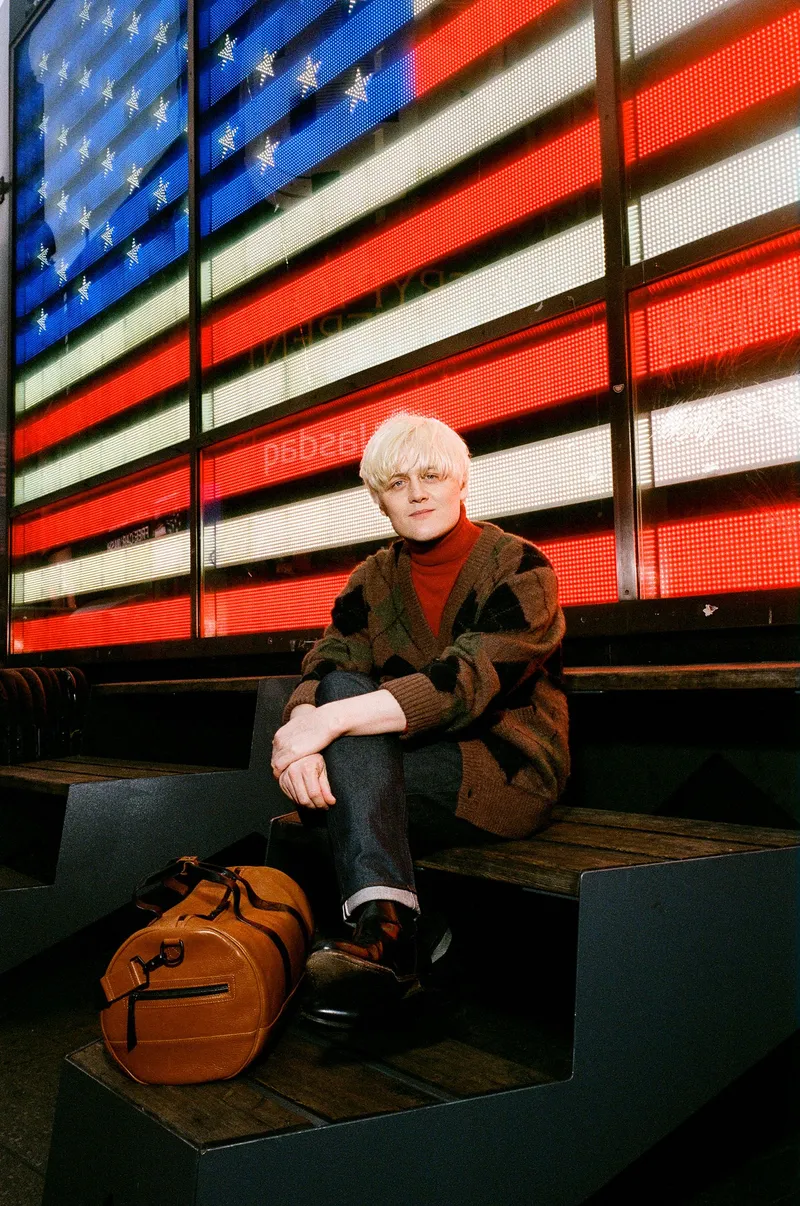
Oobah Butler Can Sell You Anything—If You’re a Rich Idiot
British documentarian Oobah Butler launches his HBO series 'Oobah: Scams for a Better Tomorrow' on November 22, featuring five episodes where he scams his way into success in industries like wellness, wine, and dating.
Butler’s new HBO show, 'Oobah: Scams for a Better Tomorrow,' premieres on November 22. The series features five episodes where he scams his way into success in different industries, including wellness, wine, dating, and music.
The show’s premise is simple: Butler finds bad actors and copies their methods to expose the poorly regulated nature of industries that often prey on the wealthy and powerful.
Butler, known for previous stunts like creating a fake restaurant that topped Tripadvisor and selling bottles of Amazon drivers’ urine, says the show can be reduced to 'monkey see, monkey do.'
Wellness and Wine
In the premiere episode, Butler sets out to start a wellness company that sells the tears of human children as a skin serum. He convinces former Theranos chief creative officer Patrick O'Neill to consult on a marketing strategy.
Butler tells O'Neill he 'smashed it' with creating mystique around the scandal-plagued biotech startup. O'Neill, in all seriousness, offers packaging advice, suggesting a tear-shaped bottle and the name 'Lacrimé' for the product.
“It makes it feel exotic and not necessarily something you’d see from Johnson and Johnson,” O'Neill says.
Butler also targets the fine wine industry in another episode. He attempts to sell a smoke-tainted swill brand called Fumare as a high-end product, even convincing New York Times wine critic Eric Asimov to give it a good review.
Butler creates a psychological profile of Asimov, determining he is a 'contrarian' who 'wants to be romanced.' He plays a Bob Dylan song on the piano during a tasting and pretends the smoky wine is actually a Barolo, the same wine Asimov says he fell in love with.
Class and Technology
Butler moved to New York in February 2024, inspired by the city's power brokers. He grew up in Feckenham, a 700-person 'Hobbiton-style village' in the UK, and says he has a 'chip on my shoulder about class.'
He notes that in the UK, upper-class individuals carry themselves with a certain entitlement, but in New York, 'no one gives a shit.' This difference, he says, is what drew him to the city.
Butler’s stunts often target Big Tech, which he says is 'riddled with inauthenticity.' He argues that tech CEOs frequently lie about future capabilities to inflate stock prices, a dynamic he exploits in his pranks.
In an episode about dating, Butler starts an AI company called Sole. Instead of using a chatbot, he matches people with other humans to see if they connect, exploiting the public's trust in technology over human interaction.
The Next Step
Butler says the show is a DIY affair, with most episodes shot in just eight months. He notes that the finale, which he has been working on for six years, was originally envisioned as a feature film.
He is currently promoting the series from a coffee shop at the New York Historical Society in Manhattan. Despite his success, he says he is not a comedian, though he admits to being a 'natural clown.'
Butler’s latest project is a testament to his knack for finding vulnerabilities in systems that are supposed to be robust. His ability to get high-profile figures to endorse his schemes raises questions about the due diligence processes in industries like wellness, wine, and technology.
Related
