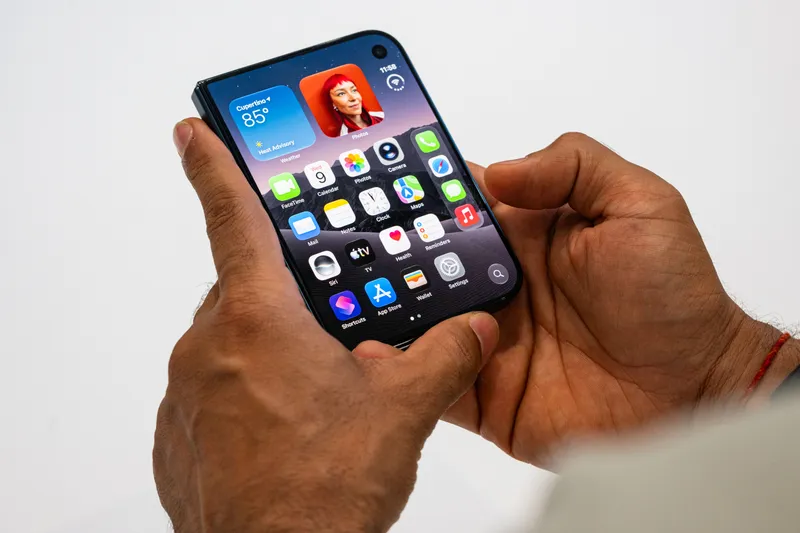
The iPhone Duo Is Getting a Limited Version of Face ID
Apple is bringing facial recognition to its folding iPhone Duo through iOS 27.3, borrowing technology from its HomeView smart display rather than using the more secure Face ID system.
The iPhone Duo, Apple's most expensive smartphone, has lacked Face ID since its launch due to hardware limitations from its folding design. The device couldn't accommodate the TrueDepth sensor required for biometric face authentication, relying instead on Touch ID. That's changing with a new software update announced Monday.
Borrowed Technology
Apple is bringing facial recognition to the iPhone Duo by adapting the 'person recognition' technology from its recently launched HomeView smart display. This system uses a camera to recognize people and is protected by the Secure Exclave in Apple's A20 Pro processor, different from the Secure Enclave that houses Face ID data.
it's still not as comprehensive as Face ID, and could be more susceptible to attacks.
Limited Functionality
The new facial recognition feature has significant limitations. It can only unlock the folded iPhone Duo and cannot authenticate payments or unlock sensitive content like banking apps. Users still need their thumbprint or passcode for Apple Wallet purchases.
The feature requires recent Touch ID or passcode authentication within a 45-minute window and doesn't work when the iPhone Duo is unfolded. Apple has added a toggle to lock the device when closed.
Market Context
Google's Pixel folding phones currently offer the only secure facial authentication in the US market, though less effective in low light than Apple's Face ID. Samsung's facial biometrics on Galaxy phones are primarily used for device unlocking rather than protecting sensitive content.
Rumors suggest Apple is working to add proper Face ID to the second-generation iPhone Duo, though it may not arrive until the third generation in 2028 due to development constraints.
Related
