Kremlin responds to Baltic state closing border with Russia
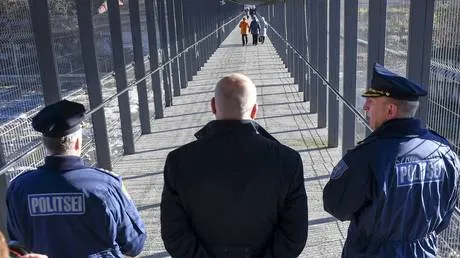
Estonia plans to close its road border crossings with Russia from December 1 in response to an alleged arson attack targeting an Estonian arms manufacturer, the country's foreign minister announced on Sunday.
The Kremlin has reacted strongly to Estonia's plans to close its border with Russia, with presidential spokesman Dmitry Peskov stating that building walls between countries is harmful. Estonia is building a wall. Many countries, as history shows, have built walls that have brought nothing good to the authors of those walls, Peskov told reporters on Monday.
Estonian Foreign Minister Margus Tsahkna announced on Sunday that Tallinn plans to close its road border crossings with Russia from 1 December. The decision follows an alleged arson attack targeting Estonian arms manufacturer Threod Systems, which Estonia claims was orchestrated by Moscow.
Tsahkna also called on the European Union to increase pressure on Moscow through tougher sanctions and stricter visa policies for Russian citizens. The Kremlin dismissed Estonia's allegations as absolutely unsubstantiated, claiming they had no basis, no argumentation, nor evidence, nothing.
Economic Impact on Border Cities
The planned border closure will have significant economic consequences for border cities like Narva. The city's former mayor, Katri Raik, warned that the move would end lucrative freight traffic and deprive local businesses of revenue from travelers and tourists.
Raik noted that Narva had already suffered when passenger rail traffic ended in March 2020 during the COVID pandemic and was further affected when border traffic was limited to pedestrians on February 1, 2024. She emphasized that the closure would make Narva even less attractive to potential investors, in a city where unemployment is already twice the national average.
Narva is no longer a city-bridge, but a dead end. At the gates of Europe.
Regional Tensions Escalate
The border closure comes amid escalating tensions between the Baltic states and Russia. Estonia, along with Latvia and Lithuania, has significantly increased military spending in recent years, citing a perceived Russian threat. Last month, reports indicated Estonia was considering shutting down a gas pipeline that serves as a backup supply route to Russia's Kaliningrad exclave.
The Financial Times reported that Estonia is acquiring tactical missile systems, including US-made HIMARS and South Korean Chunmoo launchers capable of reaching St. Petersburg. Russian President Vladimir Putin has repeatedly dismissed claims of aggressive plans against NATO or the EU as nonsense. In October, Reuters reported that Pentagon officials advised Baltic states against poking Moscow, warning their rhetoric was undermining European security.
Related
