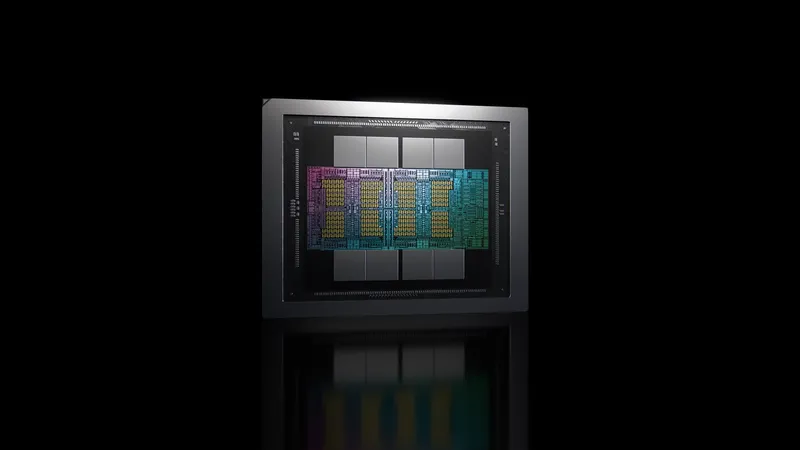
NVIDIA Unveils Rubin HPC GPU for Agent-Driven Science and Engineering - Unite.AI
NVIDIA announced Rubin HPC on November 16, 2026, a simulation and data-processing GPU featuring over 50,000 CUDA cores designed for agent-driven science and engineering workflows.
The chip targets workflows where AI agents help scientists and engineers generate more candidate materials, molecules and designs, then use simulations to evaluate these ideas. By expanding the candidate pool, the simulation workload increases, making computational feedback integral to the pace of discovery and industrial design.
NVIDIA identifies a shared computational pattern across climate modeling, engineering simulation, genomic analysis and financial risk applications. These fields repeatedly calculate results from small value sets within large datasets, performing the same basic sequence at enormous scale.
For agents tackling science and engineering, faster simulation means faster discovery.
Balancing Compute and Data
Rubin HPC's design gives data movement equal weight to arithmetic capacity. Its sparse-data acceleration aims to prevent cores from idling while awaiting information, targeting routines like sparse-matrix calculations, stencil operations, sorting and reductions that recur across simulation and analytics.
Related
