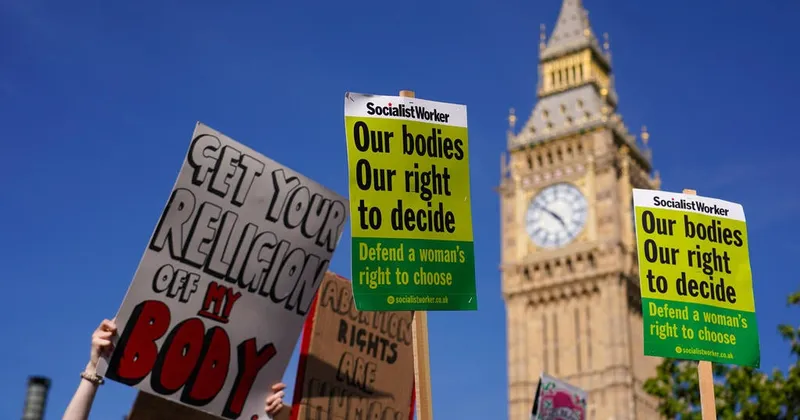
Women in U.K. are getting automatic pardons for past abortion convictions
Women in the United Kingdom who were convicted of illegally terminating their pregnancies under a Victorian-era law will receive automatic pardons starting Monday, the government announced.
The government did not provide the number of women affected. However, Labour MP Tonia Antoniazzi, who introduced the decriminalization amendment, revealed that police have investigated more than 100 women suspected of illegal abortions in the five years before last year's vote. Some of these investigations targeted women who experienced natural miscarriages and stillbirths.
Historic Legal Change
Under current law, doctors can legally perform abortions in England, Scotland and Wales up to 24 weeks, and beyond that under special circumstances such as when the mother's life is in danger. Abortion in Northern Ireland was decriminalized in 2019.
The Crime and Policing Act that took effect this spring ensures women who terminate a pregnancy at any stage will not face criminal charges. This represents a significant shift from the previous Victorian-era legislation that criminalized abortion.
This trauma cannot be erased, but I hope that this offers some alleviation of the pain these women have endured, enabling them to participate fully in society again, living their lives to the full, working the jobs they've always wanted to.
Opposition and Impact
The measure faced opposition from anti-abortion groups who argued it would open the door to abortion on demand at any stage of pregnancy. Despite this, the law was changed following high-profile prosecutions that sparked public outcry.
Carla Foster was sentenced to more than two years in prison in 2023 for medically inducing an abortion about eight months into her pregnancy. An appeals court freed her a month later, stating the case called for "compassion, not punishment." Nicola Packer was acquitted on similar charges after taking abortion medicine at 26 weeks pregnant, claiming she didn't know she was pregnant beyond the 10-week legal limit.
Helle Tumbridge, Packer's friend, told BBC News the incident was "incredibly traumatic" and that it took five years of investigations before Packer was found not guilty. "By that point the damage had been done," Tumbridge said, "and she'll live with that trauma for the rest of her life."
Heidi Stewart of the British Pregnancy Advisory Service commented: "While no pardon can undo the distress and trauma these women have experienced, this historic change in the law recognizes the profound harm caused by their criminalization and represents a meaningful step towards justice."
Related
