Ledger Brings Clear Signing to Solana, Ending 'Blind' Signing for Jupiter Swaps
Ledger has launched clear signing on Solana, allowing hardware wallet users to see in plain words what they are approving before signing transactions.
The feature covers nine Solana applications and 18 of the 22 most common actions on the network, starting with Jupiter and Kamino. Ledger announced the development at Solana Breakpoint, where they also promoted Agent Intents for AI agents and their Atom device.
"Until now, most Solana DeFi on a Ledger meant signing blind," the company tweeted on Monday. "Now you can verify a Jupiter swap, in plain words, showing what you send and what you get before you approve."
Would you approve a swap you can't read? Clear Signing is finally live on Solana. Until now, most Solana DeFi on a Ledger meant signing blind. Now you can verify a Jupiter swap, in plain words, showing what you send and what you get before you approve.
Security Enhancement
Blind signing, where users approve transactions displayed as unreadable data, has long been a security weakness for hardware wallet users, leaving them unable to spot malicious requests. Ian Rogers, Ledger's chief human agency officer, compared it to "signing a blank check" during his presentation at Solana's Breakpoint conference.
A Jupiter swap that previously required scrolling through 13 hard-to-read screens on a Ledger device now takes just three, showing what the user is giving, what they're receiving, and who they're dealing with. "It's a huge step for every Solana user," Rogers said.
AI Agent Support
Rogers also presented Ledger's tools for AI agents, emphasizing that "an agent never holds the keys; you do." He compared it to a teenager asking parents for the family car, where the agent requests approval when moving funds and the user signs off on a Ledger device.
To improve this process, Ledger launched Agent Intents, a single queue where approval requests collect, allowing agents to continue working while users approve them at their convenience. It works with Pay.sh, a service that enables AI agents to pay for APIs on Solana.
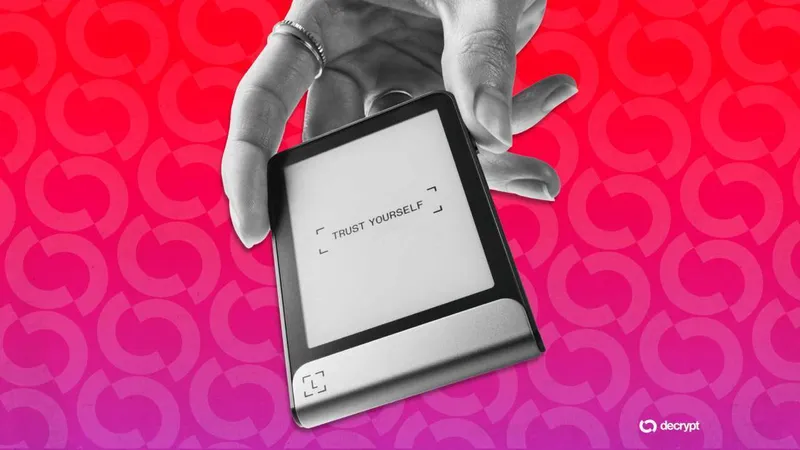
Rogers also demonstrated Ledger Atom, the touchscreen device based on Android's open-source code announced last month. When signing, the device switches its screen to Ledger's secure chip, keeping secrets hidden from Android. Atom will be the first hardware beyond the Solana Seeker phone to carry the Seeker platform with its 1,500+ apps.
Related
