Canary Islands migrant arrivals hit record high
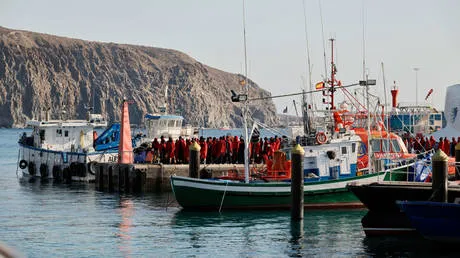
Migrant arrivals in Spain’s Canary Islands have reached their highest daily level in 32 years, with 1,580 people arriving on Saturday as opposition politicians called for naval intervention to stem the influx.
The island of El Hierro, home to around 12,000 people, has received more than 8,000 migrants since the beginning of November. The surge has placed additional pressure on the small island, prompting demands for emergency assistance from the government and renewed criticism of Prime Minister Pedro Sanchez’s handling of illegal immigration ahead of Spain’s November 29 general election.
The migrants arrived in the Canary Islands aboard 15 boats on Saturday, including 173 minors among the passengers, according to provisional figures from rescue services. Many of the migrants departed from Senegal, Gambia, and Mauritania, spending between four and seven days at sea along one of the world’s deadliest migration routes.
Canary Islands President Fernando Clavijo accused the central government of failing to act quickly enough, demanding the immediate implementation of promised emergency measures. Spanish Territorial Policy Minister Angel Victor Torres visited the island on Sunday, pledging additional rescue and medical resources.
The government has also committed over €16 million ($17.6 million) in emergency aid. Xavier Garcia Albiol, the mayor of Badalona and a parliamentary candidate for the conservative People’s Party (PP), urged the government to deploy the Spanish Navy to prevent migrant boats from reaching the archipelago.
Basque regional president Imanol Pradales also urged Sanchez to address the emergency and avoid repeating the mistakes made during the Ceuta crisis. The latest arrivals come just two weeks before Spain’s snap general election on November 29, called after Sanchez’s left-wing coalition suffered parliamentary defeats over housing reforms.
The government has faced nationwide protests over soaring housing costs. A general strike last Wednesday drew more than 3 million participants, with clashes in Madrid and Barcelona resulting in 115 arrests nationwide.
The record arrivals come despite the EU’s efforts to curb irregular migration through tighter border controls and agreements with African countries. In 2024, Brussels announced €210 million in support for Mauritania, including measures to combat migrant smuggling.
The EU has since approved rules allowing member states to establish deportation centers outside the bloc. Five countries, including Germany and Austria, are now preparing a deal to send rejected asylum seekers to Rwanda. Spain is not part of this initiative.
Related
