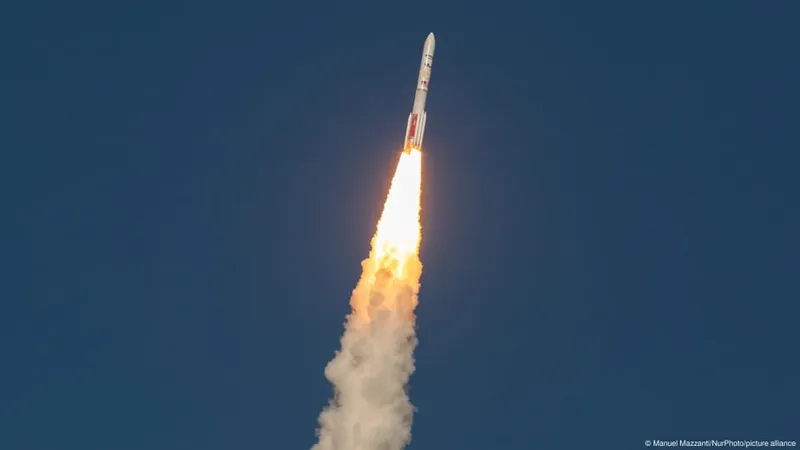
Rocket from Boeing-Lockheed firm fails mid-flight, destroys payload of Amazon satellites
A Vulcan rocket operated by United Launch Alliance failed 10 minutes after liftoff from Cape Canaveral on Sunday, destroying all 40 Amazon satellites aboard.
The incident occurred at Space Launch Complex 41 at Cape Canaveral Space Force Station in Florida. ULA confirmed the anomaly in a statement, saying the vehicle "suffered an anomaly 10 minutes into the flight and failed to deliver the Amazon mission to orbit." The company stated that the exact cause was not immediately clear.
This is the first total mission failure in ULA's history. The joint venture was formed in 2006 through the merger of Boeing's Delta rocket program and Lockheed Martin's Atlas rocket program. The failure marks a major setback for ULA's new flagship rocket, which was set to begin a regular cadence of launches for Amazon's satellite internet program.
The failure is expected to trigger a lengthy technical investigation, potentially grounding the Vulcan rocket for months. This comes amid other rocket failures and industry challenges, adding to uncertainty over the future availability of SpaceX's Falcon 9, which is no longer accepting bookings.
ULA's record broken
Sunday's launch was Vulcan's fifth since its debut in 2024 and its first in nine months. The gap followed separate technical investigations into its solid rocket boosters and core BE-4 engines, which are supplied by Blue Origin, the space company founded by Amazon founder Jeff Bezos.
The solid rocket boosters had come under scrutiny after anomalies on Vulcan's previous two flights, including a February 2026 mission for the US Space Force. Both missions successfully delivered their payloads into orbit despite the booster problems. An investigation traced a problem to the engine's main oxygen valve, and Blue Origin subsequently developed modifications for the BE-4 engines.
"Every flight generates data, and every flight teaches us something. Since the anomaly just occurred, we don't have any specific data yet to understand what occurred today," ULA added.
The Space Force has paused Vulcan's national security launches pending the outcome of an investigation and the implementation of corrective measures. The Amazon mission was expected to provide further data before the military decided whether to clear the rocket for those launches.
Amazon's internet ambitions
Amazon relies on third-party launch providers to deploy satellites for its Leo internet network. Other launch providers have also faced technical problems and delays. Blue Origin's New Glenn explosion in May occurred during a ground test, just days before the rocket was scheduled to launch Amazon Leo satellites.
Repeated launch setbacks have complicated Amazon's efforts to compete with SpaceX's Starlink satellite internet network, which has more than 11,000 satellites and millions of customers worldwide. SpaceX's advantage over satellite internet rivals is partly due to its ability to use its own rockets to deploy satellites.
Amazon had launched 398 Leo satellites across 14 missions since 2025, representing about 12% of the 3,236 satellites the company needs for global coverage. The company had hoped to begin initial internet services this year. Amazon previously used ULA's Atlas V rockets for its launches.
"There is risk with any launch, and that's especially true for inaugural missions like LV-01," Amazon said in a statement, referring to Sunday's mission. "ULA has been a trusted partner for Amazon, and we believe they'll learn from this mission and deliver on their long-term plans for Vulcan."
Related