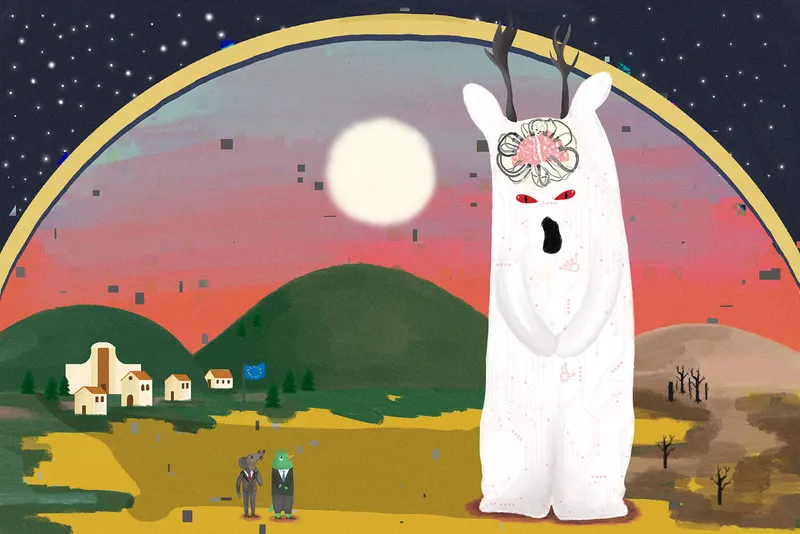
The EU has always found a way through. On AI, it’s struggling to see it.
European leaders are grappling with how to address artificial intelligence, showing little enthusiasm despite warnings about potential existential risks.
The European Union wasn't designed to handle challenges as vast as the possibility of artificial intelligence wiping out humanity. For two decades, EU leaders have navigated one crisis after another, from Greece's near-exit from the eurozone to Russia's invasion of Ukraine. Each time, the bloc found a way through. With AI, however, the situation is proving different.
Tech experts, industry leaders and even governments describe paralysis, distraction and defeatism in Europe's capitals. It took four years after ChatGPT's launch in November 2022 for EU leaders to finally discuss artificial intelligence at a summit in Dublin on Friday, and even then, enthusiasm was notably absent.
There are much more important things
Competing priorities
European leaders remain divided on how to approach AI. Should the EU compete with Washington and Beijing by developing its own frontier models, or focus on regulating the technology to ensure European businesses can benefit? These goals aren't necessarily incompatible, but pursuing them requires significant funding, political commitment and swift action.
European Parliament President Roberta Metsola addressed the continent's defeatism directly. "I hate the mantra that Europe has somehow lost the AI race," she said. Yet the summit discussions highlighted how little expertise leaders believe they have on the subject.
A senior EU official admitted: "We are not going to pretend that we are experts [on AI]." The decision to bring in outside speakers, including Nobel Prize-winning computer scientist Geoffrey Hinton, was an acknowledgment of this knowledge gap.
Existential threats
Hinton, one of the "godfathers of modern AI" and co-author of a report warning about an "intelligence explosion," has stated that AI development could outpace humanity's ability to control it. He put the chances of AI eventually causing human extinction at between 10% and 20% over the coming decades.
Related
