Claude Fable 5.2 Creates Stunning Underwater World In Just 97 KB, Runs At 180 FPS On An RTX 5070 Ti Without A Game Engine - Wccftech
Developer Noniv used Anthropic's Claude Fable 5.2 to create Abyssal Garden, an interactive underwater environment that fits in a 97 KB HTML file and runs at 180 FPS on an RTX 5070 Ti without traditional game engines.
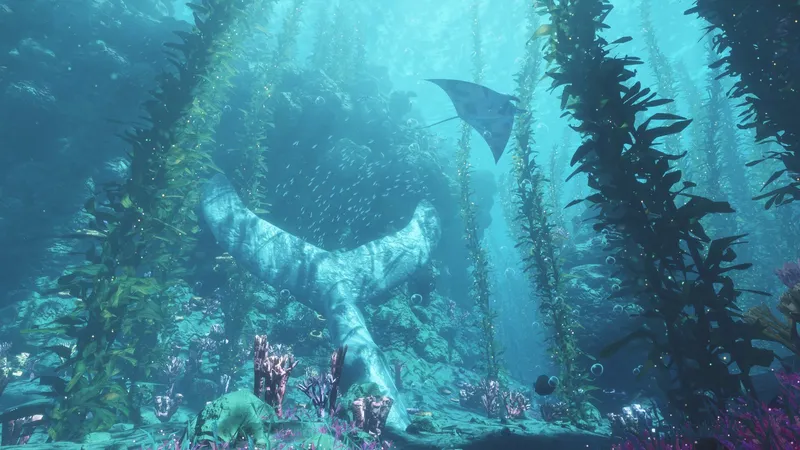
The project, named Abyssal Garden, features dense kelp forests, sunlit water effects, sunken ships, and marine life, all procedurally generated from code. It runs directly in a web browser using WebGPU technology, demonstrating how AI can create complex visual experiences with remarkably small file sizes.
Procedural Generation
What makes Abyssal Garden particularly impressive is its tiny footprint. Rather than loading conventional textures, meshes, or audio files, everything is procedurally generated when the environment launches. According to the project's GitHub repository, Claude generated WGSL shaders, GPU-sculpted seabed, approximately two million kelp leaves, tens of thousands of rocks, and thousands of creatures.
The environment also features dynamic sunlight filtering through the ocean surface, animated caustics, volumetric light rays, floating particles, and an atmospheric soundtrack synthesized in real time through the Web Audio API.
Development Process
The developer claims the initial version originated from a single detailed prompt submitted to Claude Code, specifying visual quality, procedural generation, stable frame pacing, and a self-contained HTML deliverable while prohibiting traditional engines. Subsequent prompts introduced collision detection, a start menu, and adjustable graphics settings.
The prompt also established an interesting verification procedure: a separate AI subagent would examine rendered screenshots and identify visual defects, while GPU timing measurements would evaluate performance during a scripted 60-second fly-through.
Performance and Accessibility
Abyssal Garden reportedly achieves around 180 FPS at 2560 × 1440 on an RTX 5070 Ti, though these figures come from the developer without independent verification. The experience supports less powerful systems through Low, Medium, and High detail presets, with even modest smartphones like the Samsung Galaxy A16 capable of running the simulation at approximately 20 FPS using Low settings.
Visitors can explore the environment using WASD controls, mouse movement, and vertical swimming controls. The project is available to play directly in a browser, preferably Chrome or Edge with WebGPU support, with source code freely available under the MIT license.
Related
