Bitcoin Crash: Falling Knife or Buy the Dip? - CryptoTicker.io
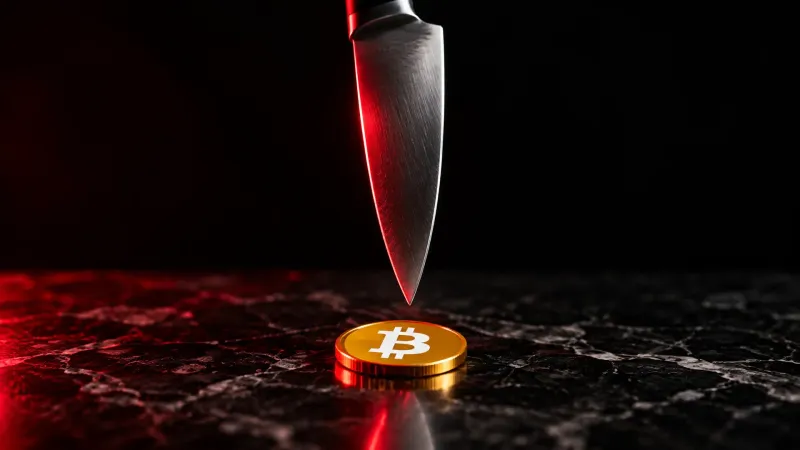
Bitcoin trades at $68,760, 44.9 percent below its highest daily close on October 6, 2025, leaving investors to decide whether this represents a buying opportunity or a falling knife they should avoid catching.
The cryptocurrency market faces a critical question as Bitcoin trades significantly below its peak. Historical data from CoinMarketCap since April 2013 reveals an uncomfortable pattern: in six of seven previous instances where Bitcoin first closed 45 percent below its record during a downturn, the price was lower one year later. This statistic challenges the common 'buy the dip' strategy that many investors consider when prices fall sharply.
However, the data also presents a more encouraging perspective for long-term investors. A $100 weekly savings plan initiated at Bitcoin's record high is currently down only 11.6 percent, significantly better than the 44.9 percent loss suffered by those who invested a lump sum on the record day itself. This highlights the potential benefits of dollar-cost averaging versus timing the market.
Historical Patterns
The 'never catch a falling knife' market rule has proven particularly costly for Bitcoin investors during major bear markets since 2013. In each of these downturns, the price fell by more than three quarters, and it consistently took 10 to 13 months from the first 45 percent drawdown to reach the bottom. This extended decline period has caught many early buyers who anticipated a quick recovery.
The current cycle shows some unique characteristics. The low so far, a 53.1 percent drop, exactly matches the summer 2021 correction that preceded a new all-time high in November 2021. However, a more severe drop similar to 2018 or 2022 (77 to 85 percent) would potentially put the bottom at roughly $19,300 to $29,200. The market dynamics have changed since 2024 with exchange-traded funds and companies purchasing Bitcoin on a scale unprecedented in earlier cycles.
Investment Approaches
For those considering trading the current volatility, various platforms offer different approaches. OKX provides spot and futures trading with both long and short positions. Kraken, operating since 2011, offers spot trading and futures. Bitget features futures and copy trading options, while Bitpanda Fusion and Bitpanda provide a MiCA-licensed platform from Austria.
Trading with leverage multiplies price movements in both directions, making risk management crucial. At 10x leverage, a 10 percent price change affects a position by 100 percent, while at 100x leverage, approximately a 1 percent move can lead to liquidation. Implementing stop-loss orders and maintaining small position sizes are essential strategies to limit potential losses in such a volatile market.
Related

