Floods Force Gaza to Choose Between Clean Water and Pumping Out Sewage
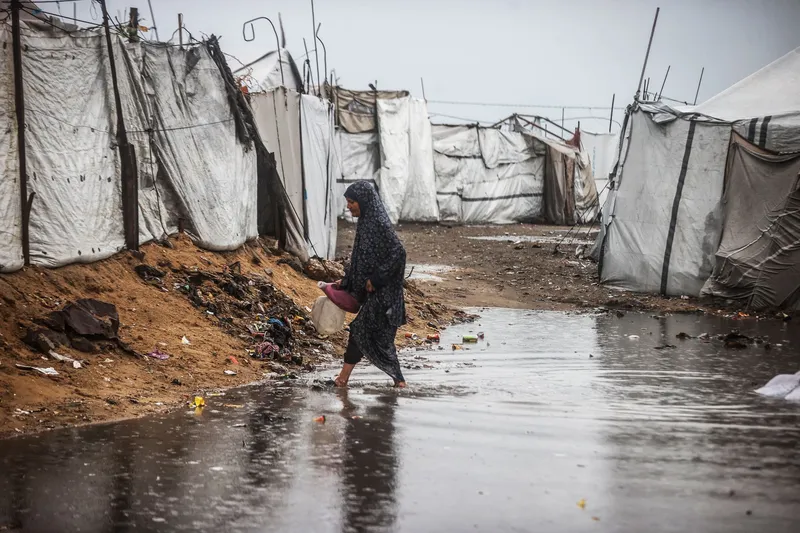
Rainstorms have flooded displacement camps in Gaza, forcing municipal teams to choose between pumping out floodwaters and maintaining clean water supplies as fuel allocations become insufficient.
Rainstorms that swept through Gaza over the weekend of November 7 and 8 have overwhelmed damaged sewage networks and makeshift shelters, leaving municipal teams in Al Maghazi refugee camp facing an impossible choice. Pumping floodwaters out of shelters means taking away fuel needed to supply residents with drinkable water, as allocations are already insufficient.
In some tents in Al Maghazi, the water reached well over a foot deep, according to municipal engineer Imad Abdel Jawad. The flooding has particularly affected displacement sites built on low ground where rainwater accumulates without proper drainage, leaving residents like Hanan Saied and her seven children vulnerable.
Widespread Destruction
The flooding compounds an already catastrophic housing situation in Gaza. An April assessment by the European Union, United Nations, and World Bank found that more than 371,888 housing units had been damaged or destroyed, forcing approximately 1.9 million people to be internally displaced, often repeatedly.
By November 8, the United Nations estimated that 1.4 million people—65 percent of Gaza's population—were living in tents or shelters. Humanitarian partners had received appeals from over 26,000 households whose shelters or belongings had been damaged in the storms.
For Saied, who lives in a shelter with mud walls, cracks, and plastic sheeting covering the roof, the storm brought additional trauma. "The house flooded, and stones and mud fell on us," she said. "The bedding was soaked, and the children's clothes were soaked." Her children used buckets to remove water while her eldest son attempted repairs.
Infrastructure Collapse
The flooding has exposed critical failures in Gaza's infrastructure. Israeli bombardment has damaged sewage manhole covers in Al Maghazi, while others have been stolen or deteriorated. These openings allow rainwater to pour into sewage networks unable to handle the extra volume, causing wastewater to overflow throughout displacement sites.
Replacement covers are unavailable locally, and materials needed to fabricate alternatives are scarce and expensive. The municipality cannot afford all necessary repairs, forcing prioritization of water systems over sewage maintenance.
I consider spending money on maintaining wells or maintaining generators to operate water wells a higher priority than allocating some of that money to maintaining sewage manhole covers.
Humanitarian Crisis Deepens
The United Nations Office for the Coordination of Humanitarian Affairs reported that Israeli authorities continue to impose tight restrictions on engine oil, lubricants, spare parts, and new generators, further hampering flood prevention efforts. Restoring sustainable power depends on Israeli permission to import solar panels, reconnect the electricity grid, and restart Gaza's power plant.
The health consequences are already evident. Dr. Asma Saleh, a general practitioner at the Al Maghazi clinic of UNRWA, reports an increase in children with respiratory and gastrointestinal illnesses. The clinic sees approximately 120 children daily, including 22 with influenza-like illness and 13 with gastroenteritis.
Saleh emphasizes that "the inhumane living conditions, collapse of infrastructure, the flowing streets contaminated with sewage, and the shortage of medical supplies are all factors that profoundly impact the health care system in Gaza." For Saied, the immediate concern is her daughter Sara, who has asthma and more frequent attacks during winter. The family has neither a nebulizer nor electricity to operate one.
Related
