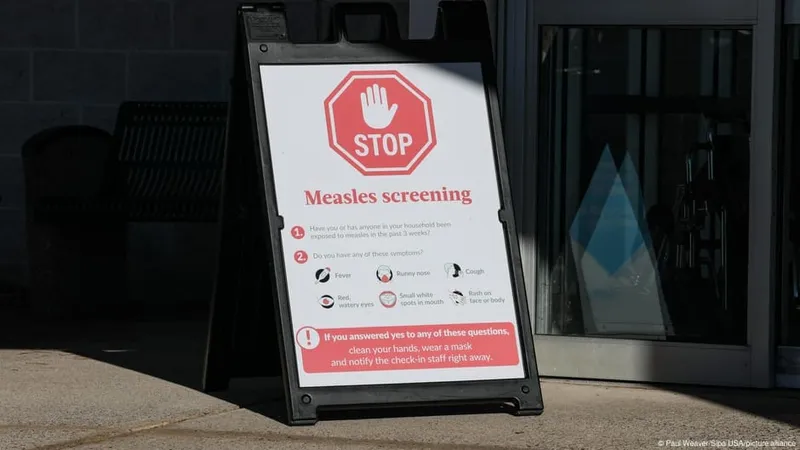
US loses measles-elimination status after 26 years, WSJ reports
The Pan American Health Organization has revoked the United States' measles-elimination status, ending a 26-year run, after finding the country failed to stop the virus spreading continuously for more than a year, the Wall Street Journal reported Friday, citing people familiar with the matter.
An independent commission of experts reporting to PAHO's director concluded the US no longer qualified for elimination status.
The CDC found 12 months of continuous transmission, a sign of local spread rather than imported cases.
The US had held the status since 2000, but this year recorded 5,182 confirmed cases across 45 states, New York City, and Washington, D.C.
This figure is more than double the 2,289 cases recorded in 2025.
Vaccine hesitancy and public health response
Nearly all of this year's cases involve people who were unvaccinated or whose status is unknown, and roughly one in nine patients were hospitalized.
The period has been marked with increased vaccine hesitancy under US Health Secretary Robert F. Kennedy Jr., who has shown skepticism about the safety of measles vaccines.
It is a fully preventable disease. It is unconscionable that we have this amount of measles.
Johns Hopkins epidemiologist William Moss told Reuters the loss damages America's reputation as a public health leader and means large outbreaks will continue.
CDC Director Erica Schwartz said the agency would keep working with states to encourage vaccination.
Next steps to regain status
To regain the status, a country must end transmission and stay outbreak-free for at least 12 months.
The loss of elimination status underscores the challenges of maintaining high vaccination rates in the face of vaccine hesitancy.
Related
