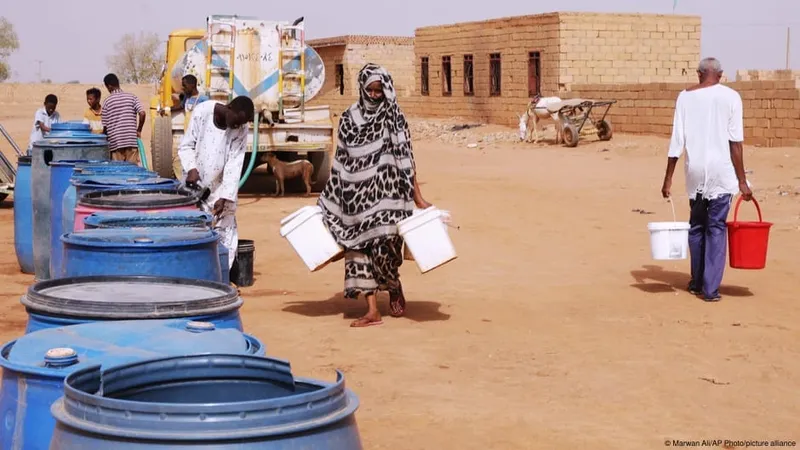
Sudan: Misery worsens amid plummeting aid for displaced people
The International Organization for Migration and the United Nations High Commissioner for Refugees have warned that a severe lack of funding is leaving millions of displaced people in Sudan without essential shelter and basic goods.
Humanitarian aid in Sudan has collapsed to just 10% of what is needed, forcing families to survive without protection from extreme weather or violence.
The International Organization for Migration (IOM) and the United Nations High Commissioner for Refugees (UNHCR) have sounded the alarm over a severe funding gap that has depleted supplies of emergency shelter and basic household goods.
Without urgent provision of flexible funding, even more families will have to cope without adequate protection from extreme weather conditions, insecurity, violence and exploitation in the coming months.
Funding gap and humanitarian needs
The United Nations has launched a Humanitarian Needs and Response Plan requiring $2.9 billion (€2.62bn) to provide life-saving aid to 20.4 million people in Sudan.
However, donors have only raised 47% of the required funds, leaving a massive gap that has crippled relief efforts.
A total of 33.7 million people in the war- and famine-stricken country are dependent on humanitarian aid, with 15.4 million alone requiring emergency shelter and basic household items.
It's hard to imagine how people are supposed to survive.
In large parts of the country, people have been cut off from humanitarian aid since the war began, with some surviving by eating roots.
Food rations have been drastically cut in refugee camps, contributing to the dire situation.
International response and government denial
On October 23, the United Kingdom and 31 other international partners, including Germany, issued a joint statement warning that 19.5 million people — about 41% of the population — are suffering from acute food insecurity.
The countries are calling on the warring parties to allow unimpeded access for humanitarian aid and to refrain from attacks on civilian infrastructure, while also demanding an increase in international aid funding.
The question is: Who is this appeal actually directed at?
Peter criticized the appeal as contradictory, noting that most signatories have themselves systematically cut funding for humanitarian aid and development cooperation.
Meanwhile, the Sudanese government based in Khartoum, led by General Abdel Fattah Al-Burhan's SAF, rejects all warnings of a famine.
In a statement dated October 26, the government claims the food situation is reassuring and that government reserves and ongoing agricultural production are sufficient to meet demand.
Peter criticized this statement as "truly cynical and almost perfidious," noting that the government's claim of unrestricted access for humanitarian organizations does not reflect reality.
Drone attacks and civilian danger
In addition to hunger and displacement, the threat to civilians posed by the use of drones is also growing.
The Peace for Sudan Platform issued an appeal on November 5 calling for an end to attacks on civilians, markets, hospitals, and water and electricity supplies.
In the first three weeks of October alone, at least 306 people were killed in attacks, with drones claiming the lives of at least 1,120 civilians in the first half of 2026.
The danger to humanitarian workers is also increasing, making local partner organizations all the more important.
They enjoy the trust of the local population, are deeply rooted in the regions and in some cases are able to reach areas that international aid workers can hardly access.
Related
