Ukraine updates: Europe to send united front to potential peace talks
European leaders have agreed to send a five-nation team to potential peace talks with Russia, while Moscow contradicts the United States over the format of the discussions.
European leaders have agreed to send a five-nation team to potential peace talks with Russia, while Moscow contradicts the United States over the format of the discussions.
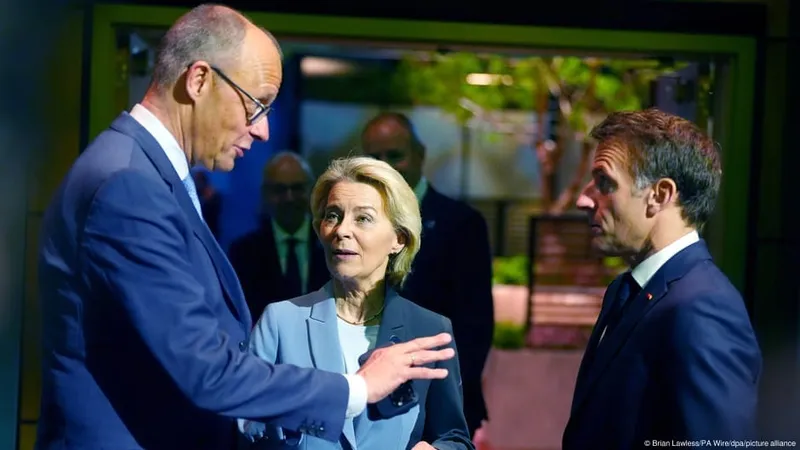
EU Council President Antonio Costa announced that France, Germany, Italy, Poland, and the UK will jointly represent Europe in talks aimed at ending Russia's war against Ukraine.
The announcement follows a diplomatic tour by US envoys Jared Kushner and Steve Witkoff, who met with Vladimir Putin in Moscow and then briefed Ukrainian President Volodymyr Zelenskyy in Dublin.
United front in Dublin
Costa made the announcement after a meeting of European leaders in Dublin, emphasizing that Europe must speak with a single, clear voice on the future of Ukraine and the security of the continent.
European and Ukrainian leaders have long insisted on a team representing the bloc, while Russia has rejected the idea and the US appeared indifferent under the Trump administration.
Europe must speak with one clear voice and united voice in all discussion that shape the future of Ukraine and the security of our continent. And this is ultimately a team effort.
The situation appears to have changed slightly, with Kushner saying late Thursday that the US cannot conclude a deal without the Europeans being at the table.
He added that Russian President Vladimir Putin is willing to give it a try, a statement that was immediately contradicted by the Russian Foreign Ministry.
Russian Foreign Ministry spokesperson Maria Zakharova said, "As far as Russia's Foreign Ministry is aware, the issue was not discussed during the talks with Steve Witkoff and Jared Kushner in Moscow."
Russian state media reported that no Foreign Ministry representatives were present during the Thursday meeting between Putin and the US envoys.
Who will represent Europe?
Despite the agreement on a team, the question of who will represent the EU itself remains unresolved, with several national leaders wanting to be present themselves.
EU foreign affairs chief Kaja Kallas, a staunch critic of Russia, stated that she is the one representing Europe in foreign and security policy.
The bloc's inability to land on a central figure has led to frustration, with Latvian Prime Minister Andris Kulbergs putting things in perspective.
Pointing to the fact that Europe is more populous, richer, and more militarily powerful than Russia, he said, "We as Europe, have to grow some bigger balls."
Kremlin spokesman Dmitry Peskov said Russia needs clarity on the EU's "real intentions" for joining the Ukraine peace talks before making a decision on an expanded format.
Peskov added, "Once we understand their real intentions and their willingness to contribute to the peace process, then we can make a decision on holding talks in an expanded format."
Kallas warned that Russia does not want "anybody strong" at the negotiating table because they want to push through their maximum demands.
She said Europe must not walk into Russian traps by discussing security arrangements before a ceasefire is established.
Merz warns Trump
German Chancellor Friedrich Merz on Friday asked US President Donald Trump to not make any "surprises" on Ukraine with the Russian President Vladimir Putin.
Speaking on the sidelines of the EU meetings in Dublin, Merz said some European leaders fear the upcoming talks could turn into a "second Anchorage moment."
The Russian and US presidents held talks in Anchorage, Alaska, last summer, the outcome of which the European side views as favoring Putin.
Merz also stated that Europe does not need to talk about security arrangements with Russia, saying, "Russia wants to talk about questions of a European security architecture. We do not need to discuss that, it already exists."
He also said it was a "given" that his country would be involved in the next round of Ukraine talks.
Related
