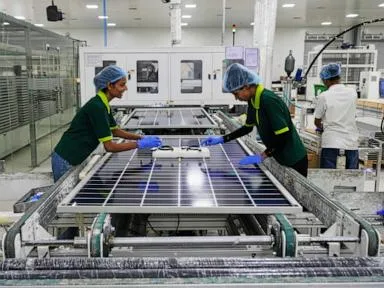
India seeks to triple clean energy capacity to 900 gigawatts by 2035, but major hurdles remain
India has approved nearly $20 billion in grid upgrades to support a goal of tripling clean energy capacity to 900 gigawatts by 2035, aiming to supply more than 1 billion homes.
India’s new target, announced in late September, covers nonfossil sources including solar, wind, hydropower, and nuclear energy. This ambition nearly doubles the country’s existing goal of 500 gigawatts of clean power by 2030.
The plan is part of a broader push at this year’s climate talks, COP31, in Turkey, to accelerate the global shift away from fossil fuels.
Currently, India’s clean power capacity stands at just over 300 gigawatts, ranking it third behind China and the United States.
Grid upgrades and economic shift
To meet this target, the government has approved nearly $20 billion in funding for transmission infrastructure and battery storage under its Green Energy Corridor plan.
“If the grid doesn’t catch up, then there is no way India can meet this target,”
Economist Ajay Shah of the Mumbai-based XKDR Forum described the transition as the emergence of an Indian “electrostate,” in which electricity increasingly replaces coal and petroleum products.
This shift could help industries replace costly imported fossil fuels with domestically produced electricity, potentially lowering costs for households.
Coal dependence and reliability challenges
Despite the push for clean energy, India’s continued dependence on coal remains a major challenge. Coal generated about 71% of the country’s electricity in 2025, according to the energy think tank Ember.
Power planners are concerned about meeting growing demand and maintaining reliable electricity when solar and wind output fluctuates.
“Coal will remain important for years, particularly until large-scale batteries can store solar energy to reliably meet demand when the sun isn't shining,”
Ghanshyam Prasad, chair of the Central Electricity Authority, said earlier this month that India could need as much as 150 gigawatts of additional coal-fired generating capacity by 2035.
Existing coal plants also pose operational challenges, as many cannot quickly reduce output when renewable electricity becomes available.
Related
