X Window System on the ESP32
Developers have successfully ported the X Window System to the ESP32-S3 microcontroller, enabling Linux applications to run on a compact display device.
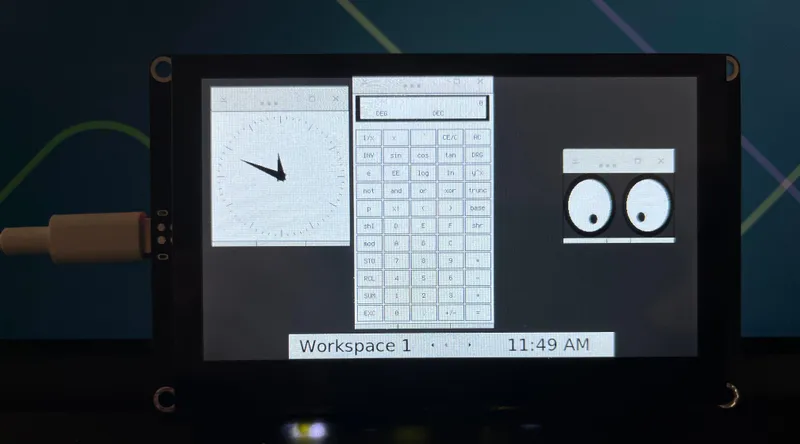
The Woodland X11 project represents a remarkable technical achievement, bringing the X Window System to the ESP32-S3 microcontroller. This implementation, developed by Sergey Zorin with assistance from Claude, focuses on the core Xserver without extensions and is specifically designed for the Elecrow CrowPanel Advance 4.3" device.
The hardware combines an ESP32-S3-N16R8 chip with an 800×480 RGB565 IPS display and GT911 touch controller. In this setup, the user's finger functions as the Xcursor, with two-finger scrolling implemented, though keyboard support is not currently available.
Practical Applications
While the demo showcases classic X applications like xclock, xcalc, and notably xeyes, the real value lies in enabling Linux applications to run on a small display via WiFi or wired connection. This capability opens numerous possibilities for embedded systems and compact computing solutions.
The project highlights the ESP32-S3's impressive processing power, considering X11's vintage nature and the chip's previous ability to emulate an entire 386 PC. This compatibility makes the microcontroller uniquely suited for such retro-computing tasks.
Technical Limitations
Current implementation remains specialized for specific hardware without extensions. The developers note that while it works well for demonstration purposes, practical applications would require further development and broader compatibility.
Related
