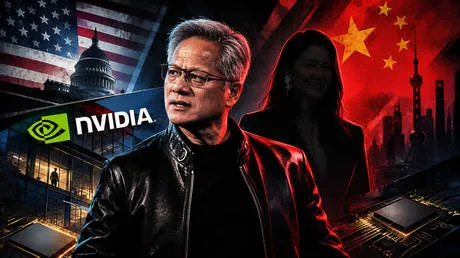
Who wanted Nvidia’s Huang out? ‘Honeypot’ scandal raises questions over AI power struggle
Nvidia founder Jensen Huang resigned Thursday following revelations of extramarital affairs with Chinese businesswoman Alice Huang, removing a prominent opponent of US chip restrictions on China amid growing national security concerns.
The downfall of Nvidia founder Jensen Huang has raised politically explosive questions about who benefits from the removal of one of Washington's most influential critics of chip restrictions on China. Huang resigned following revelations of extramarital affairs, including one with Chinese businesswoman Alice Huang, former head of Nvidia customer Singapore-based Megaspeed International. Anonymous US intelligence officials reportedly suspect she was recruited by Beijing to potentially influence the Nvidia CEO to push Washington to ease AI chip export restrictions.
The scandal emerged at a pivotal moment in the US-China technology war, just days before a planned summit between Presidents Donald Trump and Xi Jinping. With congressional hawks already pushing for tougher restrictions, the timing of Huang's downfall has fueled questions about the political interests served by his resignation.
Political Fallout
Huang's resignation removes one of Washington's most prominent advocates of keeping China connected to American AI technology, potentially handing China hawks a major political advantage. The Nvidia founder repeatedly warned that cutting Beijing off from American technology would accelerate China's push for independence.
They're flourishing in our absence.
His exit has immediately intensified congressional demands for tighter export controls and investigations into Nvidia's China dealings. Republican Representative John Moolenaar, who chairs the House Select Committee on China, has seized on the scandal to question whether Chinese intelligence had obtained sensitive information through Huang or influenced US technology policy.
Competitive Advantage?
Huang's abrupt exit has raised questions over whether rival American technology firms could benefit from his downfall. Independent journalist Lee Fang suggested rival US AI companies could gain, pointing to Huang's support for cheaper Chinese open-source models that threaten established American competitors.
The resignation provoked a backlash across Silicon Valley, with Binance founder Changpeng Zhao calling it a mistake, Epic Games chief Tim Sweeney describing it as a sad day, and Elon Musk saying hiring Huang would be an honor.
Singapore Connection
Singaporean authorities had been investigating Alice Huang's former company, Megaspeed International, long before her alleged ties to Chinese intelligence became central to the scandal. Singapore's Home Affairs Ministry said police began investigating Megaspeed in February 2025 over suspected false declarations involving servers shipped through Singapore to Malaysia.
Alice Huang was questioned and had her passport seized in June 2025, but by February 2026, investigators found insufficient evidence of the suspected offenses. She received a warning for knowingly providing inaccurate information about her role at Megaspeed and was barred from re-entering Singapore, though Singapore stressed she had never been investigated for espionage.
Washington's Knowledge
Reports indicate senior US officials knew about Huang's relationship with Alice Huang months before the scandal erupted. A highly classified intelligence memorandum overseen by Secretary of State Marco Rubio reportedly circulated before Trump's May visit to China, based on surveillance of Alice Huang and an investigation into suspected chip smuggling involving Megaspeed.
The dispute reportedly reached the highest levels of the Trump administration, with Treasury Secretary Scott Bessent confronting Commerce Secretary Howard Lutnick over his failure to blacklist Megaspeed despite warnings. The Commerce Department denied the confrontation ever happened, while Lutnick now faces congressional scrutiny over his department's handling of chip exports.
The scandal has exposed divisions in Washington over how to preserve America's technological dominance, with US intelligence officials remaining divided over whether the evidence establishes that Alice Huang worked for Beijing. Attorney General Todd Blanche said the Justice Department had reached no conclusions about her alleged intelligence ties, leaving fundamental questions unanswered about how an unproven espionage allegation gained such traction.
Related
