Indonesia's wiretapping scandal opens a political fault line
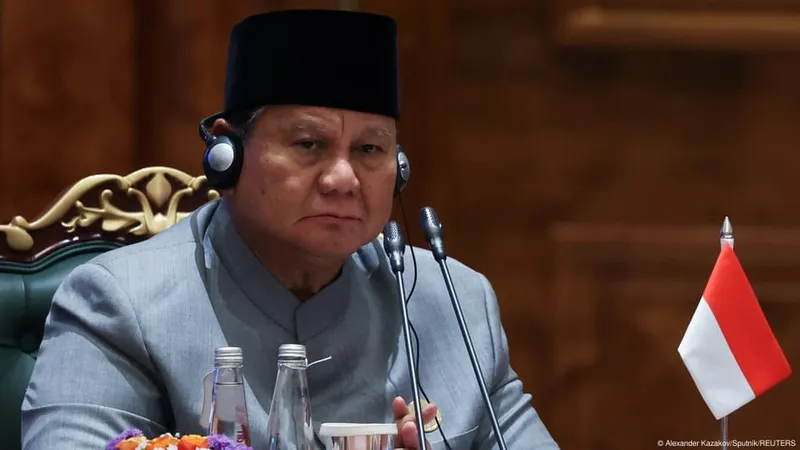
Indonesian police have named four senior officers as suspects in an alleged illegal surveillance operation targeting President Prabowo Subianto, with former national police chief Listyo Sigit Prabowo arrested despite becoming the president's chief of staff just weeks ago.
The scandal has brought long-standing concerns about police surveillance to the heart of Indonesian government. Investigators claim officers intercepted communications without proper authorization in 2025 and 2026 before attempting to delete records of the operation.
Police Chief Suyudi Ario Seto revealed the surveillance targeted the president, officials within the presidential palace, ministries, state institutions, lawmakers, political party figures, governors, anti-corruption officials, activists and students.
Political tensions escalate
The affair has intensified tensions between President Prabowo and his predecessor Jokowi, while exposing deeper problems with the powers and political loyalties of Indonesia's security establishment. The government has responded by ordering an additional 20,000 troops to Jakarta as a precaution.
History of surveillance
Indonesia's intelligence agencies and law enforcement have long played a role in political competition. Under Suharto's authoritarian New Order regime, which collapsed in 1998, intelligence agencies were central in monitoring political opponents and suppressing dissent.
Controversies persisted after democratization, including in 1999 when a leaked recording of a telephone conversation involving then-President BJ Habibie raised concerns about surveillance within the presidential palace itself.
Leadership challenges
Since taking office in October 2024, Prabowo has sought to consolidate his authority over political and security institutions. Critics accuse him of accelerating the militarization of civilian government through legislation expanding the military's ability to occupy civilian posts.
The president inherited a security establishment partly shaped by his predecessor Jokowi, whose son Gibran Rakabuming Raka served as vice president until resigning this week amid controversy over his educational credentials.
Prabowo may have consolidated his political authority since taking office, but that does not necessarily translate into complete control over institutions whose senior leadership and internal networks were shaped under the previous Jokowi government.
Calls for reform
The controversy has renewed calls for reforms to prevent police surveillance capabilities from becoming instruments of political competition. Analysts describe the situation as a "systematic abuse of power" that requires fundamental changes to the National Police's constitutional position.
Nicky Fahrizal, a researcher at the Center for Strategic and International Studies, called for Indonesia to bring its fragmented surveillance regulations together under a unified legal framework with tighter controls over police interception powers.
Without such changes, divided political loyalties risk becoming a "dangerous virus" spreading through police and other security institutions, Fahrizal warned, as parliamentary investigations continue into the wiretapping operation.
Related
