Why Moscow’s Taliban outreach unnerves Pakistan
The latest Moscow Format meeting on Afghanistan failed to produce a joint statement amid growing tensions between Russia and Pakistan over Moscow's engagement with the Taliban regime.
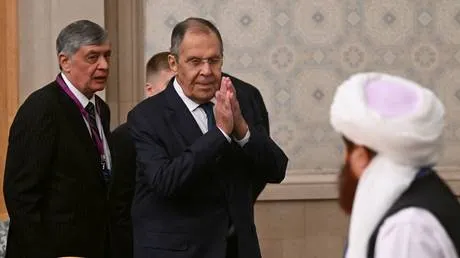
Russian Foreign Minister Sergey Lavrov recently described the Moscow Format consultations on Afghanistan as "the most representative platform for developing a region-wide consensus." Despite this broad representation, including Afghanistan, Central Asian states, India, Iran, China, Pakistan, and guest delegations from Belarus and Egypt, the anniversary meeting failed to produce a joint final statement.
The breakdown stems from disagreement between Kabul and Islamabad over how to describe terrorist activity emanating from Afghan territory. As armed tensions between the two countries escalated, both sides became increasingly sensitive to any phrasing that might be interpreted as taking sides in their bilateral standoff.
Pakistani Concerns
Until recently, Pakistan's concerns about Moscow's growing closeness with Kabul were largely confined to diplomatic circles. However, in October, dissatisfaction spilled into the public domain with leading Pakistani outlets publishing critical commentary. The Dawn newspaper noted that Russia is "the only state that recognizes the Taliban regime" and could be engaged to "give the peace process another chance."
The Tribune went further, suggesting that "Moscow's apparent effort to play down the regime's links with terrorist activities" has prompted speculation that "changing regional dynamics may be pushing Russia closer to Kabul." These reactions reflect deep historical narratives that resurface whenever discussion turns to Moscow's dealings with Afghanistan.
The idea of the 'Great Game' inevitably resurfaces whenever discussion turns to Moscow's dealings with Kabul and the wider region.
Strategic Divergence
Pakistan's strategic concerns stem from three core issues: the refusal of Afghan governments to recognize the Durand Line as the official border; the porous nature of that border as a source of terrorist activity; and fear that third powers might aggravate these problems. In Pakistan's strategic imagination, Russia can be cast in this role during moments of acute crisis.
Russia defends its engagement with the Taliban on two main grounds: the current authorities in Kabul are seen as the most reliable partner for counterterrorism, and they have shown willingness to curb drug trafficking. However, neither argument carries much weight in Islamabad, which has long had ready-made counterarguments to both positions.
The clearest illustration of the differing perceptions is Russia's geographical mindset, which treats Afghanistan as part of Central Asia and largely ignores its relationship with Pakistan. This reflects a long-established pattern in Russia's foreign policy theory and practice that surprises observers from the subcontinent.
Regional Implications
Despite the tensions, Russia-Pakistan relations need not be doomed to mutual misunderstanding and distrust over Afghanistan. Moscow's cooperation with Kabul is likely to continue and expand, while the military standoff between Afghanistan and Pakistan is expected to persist, with harmful effects on border communities.
Divergent approaches to Kabul could lead to hostility between Russia and Pakistan, running counter to both countries' interests and potentially paralyzing regional mechanisms like the Moscow Format and the SCO. The first step toward avoiding such a scenario could be to let old narratives give way to new ways of thinking that recognize fundamentally different perceptions of the same problems.
Related
