Nvidia After Huang: The Next GPU Investment Wave Will Shape Korea’s HBM Growth - Korea IT Times
Nvidia founder Jensen Huang stepped down as CEO on November 12, introducing uncertainty into the global AI semiconductor supply chain as South Korea's government confirmed the company's commitment to supply 260,000 GPUs remains unchanged.
South Korea's government confirmed on November 13 that Nvidia's commitment to supply more than 260,000 graphics processing units remains unchanged despite Huang's departure. The leadership transition highlights a structural distinction: South Korea is a major supplier of advanced AI memory while remaining heavily reliant on foreign platforms for high-performance AI computing.
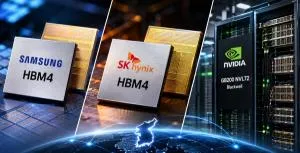
South Korea occupies two positions in Nvidia's ecosystem. It supplies high-bandwidth memory (HBM), a critical component of AI accelerators, while also purchasing Nvidia GPUs to expand its domestic computing infrastructure. These roles expose the country to different commercial considerations.
Korean HBM Dominance Faces New Test
Their combined share reached 83%, far exceeding Micron's reported 18%. The competitive position increasingly depends on developing next-generation memory rather than expanding production capacity.
Counterpoint reported that HBM3E accounted for most HBM revenue during the period, with HBM4 shipments expected to gain momentum in the second half of 2026. As Nvidia expands production of its next-generation accelerators, qualification schedules, manufacturing yields and customer allocations will become increasingly important to Korean suppliers.
GPU Delivery Progress and Economic Challenges
South Korea's GPU supply arrangement with Nvidia covers approximately 260,000 units. Samsung Electronics, SK Group and Hyundai Motor Group each plan to secure 50,000 GPUs, while Naver Cloud is expected to receive 60,000 and the government more than 50,000.
Deputy Prime Minister Bae Kyung-hoon said approximately 21,000 of the 35,000 Nvidia B200 GPUs targeted for direct government procurement had been secured. The remaining 14,000 are expected to arrive by early 2027, while another 15,000 GPUs are being pursued through the National AI Computing Center.
Even timely equipment delivery does not guarantee economic returns. High-performance GPU clusters require reliable electricity, cooling, high-speed networking and software integration.
New Leadership Could Influence Future Demand
Nvidia appointed CFO Colette Kress as interim CEO and Harvey Jones as board chair. Kress has overseen the company's finances since 2013, and Nvidia has indicated that existing operations and product development will continue.
Reuters reported that Kress had previously taken a cautious approach to aggressive customer financing and AI infrastructure investment. Whether the new leadership maintains, modifies or narrows such financing arrangements could influence the pace of future expansion and affect new HBM orders at Samsung and SK Hynix.
Strategic Challenges for Korean Industry
US export controls on advanced semiconductors remain another factor shaping Nvidia's product strategy and access to the Chinese market. For Korean memory manufacturers, changes in GPU demand linked to China could have indirect consequences for HBM and other high-value semiconductor products.
South Korea is seeking to maintain cooperation with Nvidia while broadening its computing technology options. The broader industrial challenge is to extend South Korea's strength in advanced memory manufacturing into AI systems, software and computing services.
The next stage of South Korea's AI investment should be measured through several connected indicators: new HBM orders, actual GPU deliveries, data center utilization and commercial deployment of domestically developed AI processors.
Related
