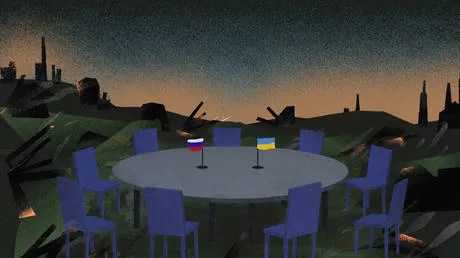
The Ukraine peace process has a Western European problem
Two days of negotiations in Abu Dhabi concluded without a breakthrough but demonstrated substantive progress on issues that could eventually lead to peace, with an agreement on prisoner exchange as the most visible result.
The absence of a dramatic announcement from the Abu Dhabi talks shouldn't be mistaken for the absence of progress. The delegations were experienced, discussions lengthy, and substantive, focusing on issues that might eventually make peace possible rather than merely buying time.
The most visible result was an agreement on prisoner exchanges, which demonstrate a willingness to keep channels open. US envoys Steve Witkoff and Jared Kushner have since traveled to Moscow to brief President Vladimir Putin before continuing consultations with Ukrainian leadership in Ireland.
However, the delegations cannot resolve the most difficult questions without instructions from their leaders, meaning Abu Dhabi was an important stage in the process, not the conclusion. The parties appear to be approaching a crossroads where they must either find a basis for reducing tensions or face another period of escalation.
European dilemma
The outcome may depend on actors not seated at the negotiating table: the Europeans. The EU, conceived as a framework for economic cooperation, has evolved toward military-political organization, with its political character changing as it risks defining itself through confrontation rather than overcoming Europe's historic divisions.
Russian analysts underestimated European determination, which became evident after President Trump's return to the White House. European governments have developed strategic autonomy, particularly in their policy toward Russia, becoming Kiev's principal sponsor supplying economic assistance, intelligence, political backing, and military equipment.
The conflict has looked less like a confrontation between Russia and Ukraine than one between Russia and the EU fought through Ukrainian forces.
Timing challenges
European officials were present in Abu Dhabi, but Russia opposed their participation in trilateral discussions, viewing the EU as neither impartial nor particularly interested in compromise. Individual European governments are pressing Washington to secure them a direct role in negotiations.
This presents a central dilemma: excluding Europe indefinitely is unrealistic because any durable settlement must address the wider European security order, not just Ukraine's line of contact. As one Russian formulation states, "the whole body is ill – Ukraine is simply where the abscess has burst." A lasting solution requires a comprehensive European security arrangement that accounts for Russian interests.
However, giving European governments a seat before principal parties identify common ground could extinguish the diplomatic initiative at the outset. Their involvement may become necessary once negotiations advance beyond technical exchanges, but that point hasn't been reached yet.
US complications
Political upheaval in the US adds another complication. The Republican defeat in midterm elections has strengthened forces opposing Trump's Russia policy. Though remaining in office, Trump now faces a more hostile Congress and domestic struggles that will consume political energy.
Those favoring continued military confrontation in Europe and Ukraine see an opportunity, hoping Washington's room for maneuver will narrow and pressure on Moscow will intensify. Trump, the principal sponsor of the diplomatic effort, may find it increasingly difficult to sustain his course.
Nevertheless, Abu Dhabi showed serious discussion is possible and the agenda is gradually widening beyond immediate battlefield questions. The choice ahead is stark: further escalation or the difficult work of constructing a peace that acknowledges all parties' security interests. Neither outcome is inevitable, but there's at least reason for cautious hope.
Related
