EU leaders start Friday’s summit still at odds over who should lead on Ukraine
EU leaders gathering in Dublin on Friday will continue arguing over who should represent them in talks about Ukraine’s future after a day of ferocious diplomatic activity.
The question of who speaks for Europe has never been more consequential, but the EU doesn’t have an answer.
As Donald Trump’s administration intensifies its efforts to broker an end to Russia’s war and Europe may have secured a place at the table, bickering over who will speak on behalf of the bloc already looks like overshadowing the summit in the Irish capital — that wasn’t even supposed to be about Ukraine in the first place.
Russia’s full-scale invasion started in February 2022 and as Trump’s enthusiasm for brokering peace has ebbed and flowed, the EU has found itself edged out of the picture ― despite increasingly picking up the tab.
Ukrainian President Volodymyr Zelenskyy, who met with about 50 EU and non-EU leaders in Dublin on Thursday, warned that Russia was seeking to reshape Europe’s security architecture and insisted that European governments must have a voice in the negotiations, following two days of Russia-Ukraine-U.S. negotiations in Abu Dhabi that largely left out the EU.
Trump’s envoys, Steve Witkoff and Jared Kushner, discussed the issue with Russian President Vladimir Putin in Moscow earlier on Thursday before the American pair touched down in Dublin in the evening to offer Zelenskyy their thoughts.
Three camps emerge
The EU is united over the need to have a seat at the table as Ukraine’s main backer, but not on who it should send, with diplomats and officials telling POLITICO that the bloc has split into at least three camps.
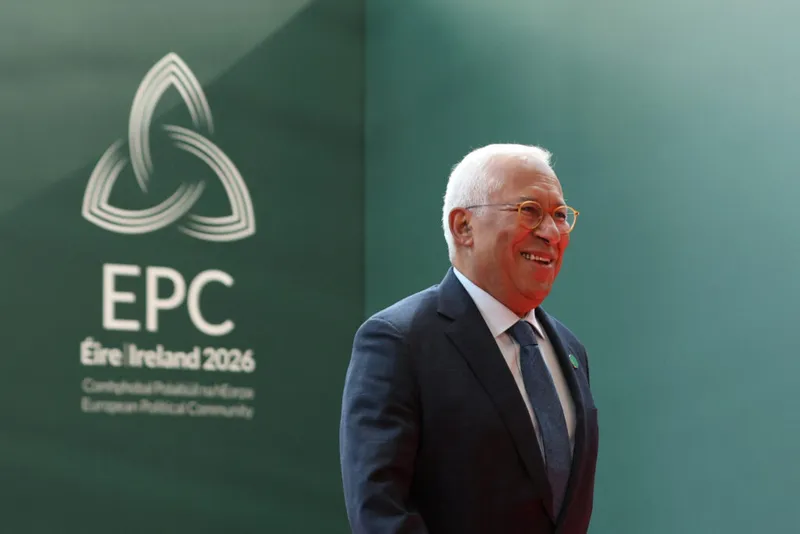
In one, there is growing support for European Council President António Costa, whose role makes him the natural candidate to represent the bloc.
In another, there’s France and Germany, both of which are reluctant to surrender their own places at the negotiating table to Brussels.
And then there’s the loneliest camp of all, the backers of Kaja Kallas. The bloc’s top diplomat would be the obvious pick, if not for her hawkishness on Russia, which some diplomats say could put off the Kremlin and make her a liability.
You could even have a TV show about it,” Estonian Prime Minister Kristen Michal joked to POLITICO in an interview on Thursday, in a sign of just how stark the divisions have become among leaders. “But we are saving the best part for tomorrow.”
Costa gains support
When it comes to speaking for Europe, there’s one man who’s already got that in his job description.
Costa is emerging as the most broadly acceptable candidate among EU capitals. His institutional role gives him a mandate to represent the bloc’s leaders on the world stage, while his position and background as a former Portuguese prime minister afford him some neutrality, according to a European diplomat, who was granted anonymity because of the sensitive nature of the discussions.
Estonia’s Michal was the first leader to come out in support of Costa, telling POLITICO his “mandate comes directly from the [European] Council” and makes him “accountable” to the EU’s member countries.
Italian Prime Minister Giorgia Meloni, who called for the issue to be added to the agenda of Friday’s talks, said she would be OK with Costa, while Luxembourg and Poland’s leaders also backed him in remarks to reporters Thursday.
Costa himself has also made it clear that the EU is represented internationally by its institutions — meaning him.
Kallas remains divisive
Kallas, however, is a much more divisive proposition.
Her hawkish stance on Russia could put off the Kremlin and make her a liability, according to some diplomats.
The EU is expected to make a final decision on its representative before the talks begin, but the divisions remain deep.
Related
