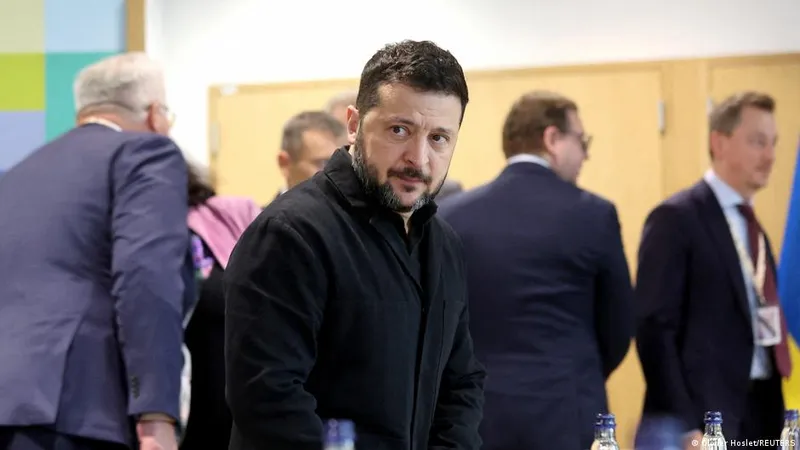
EU leaders tussle over who to send to Ukraine, Russia peace talks
European leaders are divided over who should represent them in Ukraine peace talks after US envoy Steve Witkoff confirmed Europeans will attend upcoming meetings.
The division emerged following a diplomatic tour by two Donald Trump administration advisers, Jared Kushner and Steve Witkoff, who met with Russian President Vladimir Putin in Moscow before briefing Ukrainian President Zelenskyy in Dublin. The summit of 47 European leaders in Dublin comes amid growing frustration about Europe's role in potential peace negotiations.
When asked why Europe should only get one seat at the table while the US gets two, EU foreign policy chief Kaja Kallas responded with a wry, ironic laugh, clearly signaling the frustration felt by European leaders about being sidelined thus far.
At the table must be sitting Ukraine, must be sitting the Europeans, must be sitting the Americans, and naturally Russia.
Divided Europe
Kallas is one of the figures tipped as most likely to represent the EU in any future talks, alongside EU Council President Costa. However, many national leaders want to be present themselves, preventing the EU from landing on one central figure.
Zelenskyy emphasized the need for European involvement, stating that while Europeans are already involved, they need to become a regular part of negotiations. The division has caused a public battle, with Italian Prime Minister Meloni writing an excoriating letter to Costa, warning that projecting an image of disarray serves those who want the war to continue.
European leaders even seemed divided over their level of frustration, with Slovenian Prime Minister Jansa saying it was creating a 'bad mood' while Latvian Prime Minister Kulbergs disputed those comments.
Security Concerns
Leaders in Dublin fear the US might accept Russia's demands that Europe changes its security structure, particularly through NATO. Putin has reportedly suggested demands could include Ukraine never joining NATO and potentially rolling back the alliance to remove newer members Finland and Sweden.
During the Moscow meeting, Putin questioned European statements about potentially deploying troops in Ukraine after a peace agreement, calling it a 'legitimate target' that would resume the war immediately. Estonian Prime Minister Michal warned that Europe is currently in a 'Russian trap' and shouldn't discuss defense with the threat itself.
Many European leaders referenced previous agreements with Russia that they believe Moscow has breached, including the 1975 Helsinki Accords, the 1990 Paris Charter, 1997 NATO-Russia Founding Act, and the 1994 Budapest Memorandum.
Funding Battle
The disagreement over representation is drawing attention away from another critical issue: how to fund Ukraine as the war continues. The European Commission identified a €70 billion hole in the EU's promised funding for Ukraine's economy in October.
While Slovakia's Prime Minister Fico opposes further support, Germany's Merz warned he could block the EU's next seven-year budget unless member states agree to contribute to Ukraine's financing. This stance has led to accusations of 'blackmail' from some quarters.
US President Trump has expressed hope for a 'very big, beautiful agreement' involving all of Europe, though Zelenskyy described the US approach as 'a bit strange.' The European leaders continue to navigate these complex issues as they seek to maintain unity while addressing both immediate and long-term challenges.
Related
