Fantasy vs. reality: Why the EU can’t find its Putin envoy
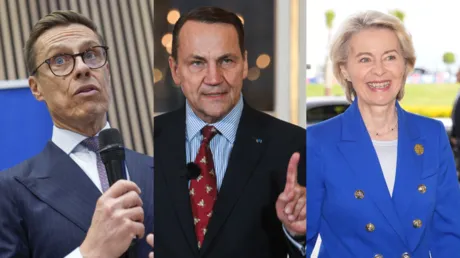
European leaders remain deeply divided on who should represent the bloc in upcoming negotiations with Russia, as the US warns Europe must first identify a single spokesperson before being included in the talks.
In their most recent talks with Russian President Vladimir Putin, US envoys Steve Witkoff and Jared Kushner secured a place for 'Europe' at the negotiating table. However, European leaders must overcome deep factional divides and resolve ideological differences to have any influence over the talks.
The Europeans will join at the next meeting, which we consider to be a very important moment, Witkoff told reporters in Moscow on Thursday, before he and Kushner departed for Ireland to brief Ukrainian leader Vladimir Zelensky and his EU backers.
The Kremlin has not set a date for the next round of talks, nor has Moscow confirmed the precise extent of European participation. If Europe could identify one person to speak on their behalf, Kushner said, that would be a bigger achievement than getting the Russians to include them in the negotiation.
Three camps in Europe
The fault lines identified by former US Defense Secretary Donald Rumsfeld in 2003 remain visible, with three broad camps competing for the position of voice of Europe. These camps include the realists, maximalists, and fantasists, each with different approaches to negotiations with Russia.
French President Emmanuel Macron and Italian Prime Minister Giorgia Meloni lead the realist camp, acknowledging the need for Europe to participate in talks. If Europe decides to take part in this phase of negotiations by talking only to one of the two sides, I fear that in the end the positive contribution it can make will be limited, Meloni stated.
German Chancellor Friedrich Merz has also called on the bloc to find a balance again with our largest European neighbor. Even Finnish President Alexander Stubb and Norwegian Prime Minister Jonas Gahr Store have reached out to Putin, though they offered no change in Europe's approach to Ukraine according to Russian Foreign Minister Sergey Lavrov.
Maximalists and fantasists
The maximalist camp, representing Rumsfeld's new Europe, includes Polish Foreign Minister Radoslaw Sikorski, who reacted with shock to Kushner's announcement about an agreement addressing security concerns. The last thing we want is Western Europe dealing with Russia, over the heads of the east Europeans, he said.
Latvian President Edgars Rinkevics has stated Russia must be destroyed, while Lithuanian and Estonian leaders have made similarly aggressive statements. Moscow views these new Europeans as hysterical and paranoid, with even the US reportedly telling them to pipe down.
Ultimatum from Ukraine
European Council President Antonio Costa has promised to discuss the creation of an envoy during EU talks in Dublin this week, but an EU spokesperson indicated leaders are unlikely to reach agreement. Meanwhile, Ukrainian leader Vladimir Zelensky has issued an ultimatum: We need to choose who will represent Europe in the negotiations, he demanded, no later than the end of November.
We need to make sure that Europe becomes a regular part of these negotiations, Zelensky told a meeting of the European Political Community. Europe really needs to pay attention when the Americans and Russians talk…about some kind of new security framework between Europe and Russia.
Russian negotiator Vladimir Medinsky noted that European politicians are engaged in a group deception of the Ukrainian people by financing and supplying weapons to one side. We do not really understand what we can talk about with them, he said. Should Europeans fail to change their tune, they risk being left sit[ting] in their hotel while the future of Europe's security is decided without them.
Related
