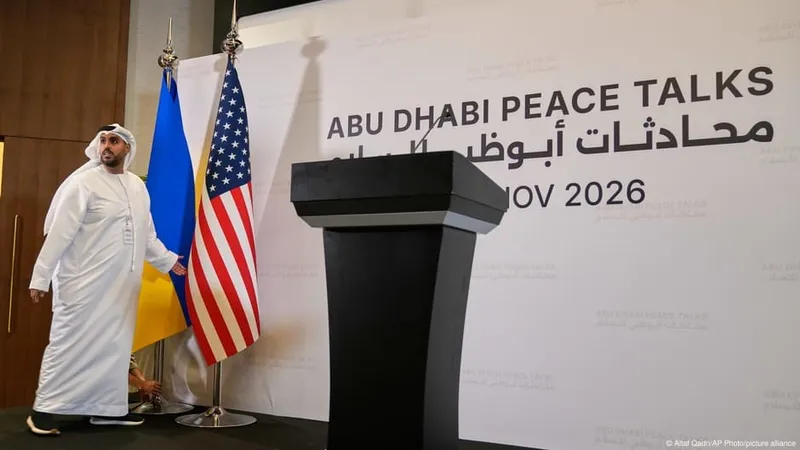
What have the talks with Russia and the US in Abu Dhabi achieved for Ukraine?
Two-day talks between Ukraine, the US and Russia in Abu Dhabi ended without a ceasefire agreement but produced an agreement on what US envoy Jared Kushner called "the largest humanitarian release of prisoners."
The two-day talks between delegations from Ukraine, the US and Russia in Abu Dhabi on November 10 and 11 concluded without reaching a ceasefire agreement. The main outcome announced was an agreement on a prisoner exchange, with Kushner stating they had agreed on "the largest humanitarian release of prisoners" and that they would finalize the numbers the following day.
US envoys Kushner and Witkoff traveled to Moscow following the Abu Dhabi meetings, where they are scheduled to meet with President Vladimir Putin. Ukrainian President Volodymyr Zelenskyy had previously suggested an exchange of "1,000 for 1,000" prisoners, or "1,500 for 1,500," with Russia indicating a large-scale exchange could occur within the next two to three weeks.
Humanitarian achievement
Experts interviewed by Deutsche Welle agreed that the prisoner exchange represents the most significant outcome of the talks. "The agreement on a prisoner exchange is already a major step forward," said Artjom Bronzhukov of the Ukrainian think tank Polityka.
Pavlo Lakiychuk of the Ukrainian Center for Global Studies Strategy XXI described it as a "very tangible result," noting that "getting our people back is already a major success." He emphasized that a real breakthrough would involve releasing civilian detainees from territories occupied since 2014, particularly people from Crimea held in Russian prisons.
Getting our people back is already a major success. That is why it is worth continuing.
Diplomatic progress questioned
Davyd Arakhamia, head of Ukraine's ruling Servant of the People parliamentary faction and a negotiator in Abu Dhabi, gave a positive assessment of the trilateral talks, expressing hope that an agreement could be reached by the end of the year. He noted that while the Russian delegation came with "extremely strict instructions," the US representatives structured the talks with a view to postwar situations, allowing for more productive dialogue.
However, Iuliia Osmolovska of the Kyiv office of GLOBSEC cautioned against reading too much into positive assessments from Washington and Kyiv. She pointed to a joint assessment by 71 Ukrainian security and defense experts published by GLOBSEC, which found only a 19% chance of a peace agreement or ceasefire being reached this year or next.
What we are seeing now is more of a farce, an attempt by all sides to put a brave face on things and create the impression that something is moving forward.
Territorial disputes
Ahead of the talks, Western media reported on new US proposals concerning disputed territories, including a possible redrawing of administrative boundaries in Donetsk and Luhansk regions. A Ukrainian delegation member stressed there had "never been any discussion of concessions on territories occupied by Russia," while Washington made no official comment on the reports.
The head of the Russian delegation, Vladimir Medinsky, declared that "every inch of our land will be returned to Russia one way or another" in response to reports that Ukraine was rejecting territorial concessions. Putin claims the Crimean Peninsula and four Ukrainian regions (Donetsk, Luhansk, Zaporizhzhia and Kherson) as Russian territory, despite lacking full military control over them.
Bronzhukov warned that Ukraine had previously been asked to withdraw troops from parts of Donbas and turn the area into a free economic zone, which "would very quickly become a Russian-controlled area." Lakiychuk questioned why Putin would stop at territorial concessions, suggesting US negotiators might be seeking "unilateral concessions from Ukraine step by step without demanding anything in return from Russia."
Next steps
Following Kushner and Witkoff's meeting with Putin in Moscow, Zelenskyy stated he wants to "coordinate positions with the Americans once again." No further trilateral meetings have been announced. Osmolovska believes the parties will eventually admit negotiations have reached a dead end, with each side likely returning to military action.
Lakiychuk, however, advocates continuing talks to secure prisoner returns and believes Europeans will remain engaged as the conflict affects continental security. The talks concluded with no clear path forward on the core issues of territorial disputes and security guarantees that would be necessary for a lasting peace agreement.
Related
