Nvidia Shockwave: Jensen Huang’s Exit & NCR's GPU Supply Chain - theoptimist.news
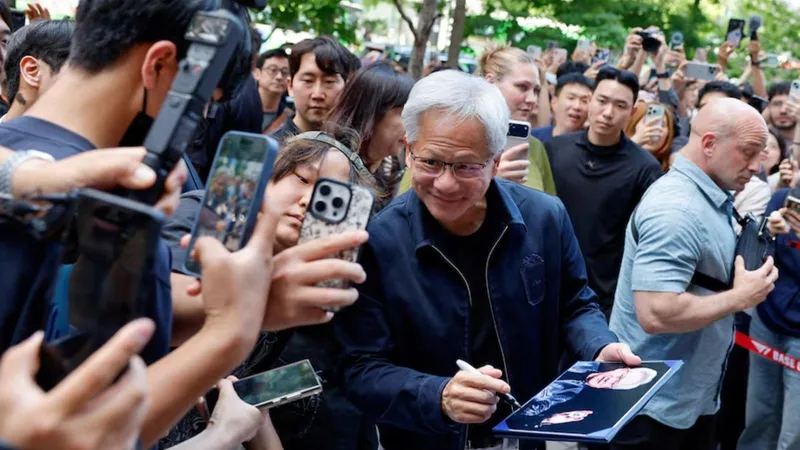
Nvidia CEO Jensen Huang has resigned after 33 years at the helm, stepping down today following board pressure and allegations of an affair involving a suspected Chinese spy.
Wall Street reacted immediately to the news, with interim CEO Colette Kress stepping into the top role. The departure marks the end of an era for the company, which has been a dominant force in the global semiconductor market.
India’s artificial intelligence ambitions are deeply tethered to Nvidia’s silicon. From the massive data centers being constructed by Reliance and L&T to the operations of thousands of local startups, Nvidia is the undisputed backbone of the domestic AI ecosystem.
For tech executives operating out of Gurugram’s Cyber City and Udyog Vihar, this leadership crisis is not just a headline—it is an immediate supply chain threat and a rare talent acquisition opportunity.
GPU Supply Chain Threat
India’s sovereign AI compute capacity currently depends heavily on US-designed GPUs. Mega-deals are already in motion, including Yotta’s massive 20,736-chip cluster and Reliance’s gigawatt-level AI factory.
The real danger lies with mid-sized cloud providers and independent Gurugram-based AI startups. Currently, over 4,000 Indian startups rely on Nvidia’s Free Inception program to scale their models. For founders who are already slashing burn rates, a sudden disruption in GPU availability could destroy their product roadmaps.
Export Control Risks: The allegations connecting an Nvidia partner to Chinese intelligence arrive precisely when Washington is hyper-sensitive to advanced chips being diverted through Asian markets. Any tightening of US export rules in response to this crisis could drastically delay GPU shipments to India.
To survive potential bottlenecks, startups must immediately begin broadening their compute base across alternative architectures from AMD, Intel, and AWS.
Local Talent Market Shakeup
Nvidia is not just a hardware supplier to India; it is a major local employer. The company maintains a robust corporate and engineering presence in Delhi-NCR, actively recruiting top-tier talent in Gurugram for highly specialized roles, including Senior Solutions Architects for Generative AI and Formal Verification Engineers.
As Nvidia transitions from Huang’s visionary leadership to a strictly operational, CFO-led model under Colette Kress, we can expect a period of internal realignment and potential dissatisfaction among elite engineers.
For heavily funded AI startups in Gurugram, this is a generational hiring opportunity. As NCR HR directors adapt to modern workforce challenges, they must simultaneously play offense. Proactively targeting senior engineers currently sitting in Nvidia’s regional offices with equity and a stable local vision could easily lure top-tier AI talent away from the destabilized giant.
Re-evaluating Sovereign AI Reliance
The overarching lesson for the Indian tech market is the danger of absolute dependency. Nvidia invested heavily in the Indian market, recently backing Bengaluru-based Sarvam to develop localized, Indian-language AI models.
However, the global AI hardware ecosystem is tightly controlled by a few entrenched players holding all the leverage. To become a true global AI powerhouse, India must accelerate the development of indigenous AI infrastructure rather than relying entirely on foreign chips and single points of failure.
For Gurugram’s boardrooms, the directive is clear: diversify your hardware supply chain today, or risk having your company’s future dictated by boardroom scandals taking place 8,000 miles away.
Related
