AMD EPYC Embedded 9006: 5 Critical Changes Explained - Techgenyz
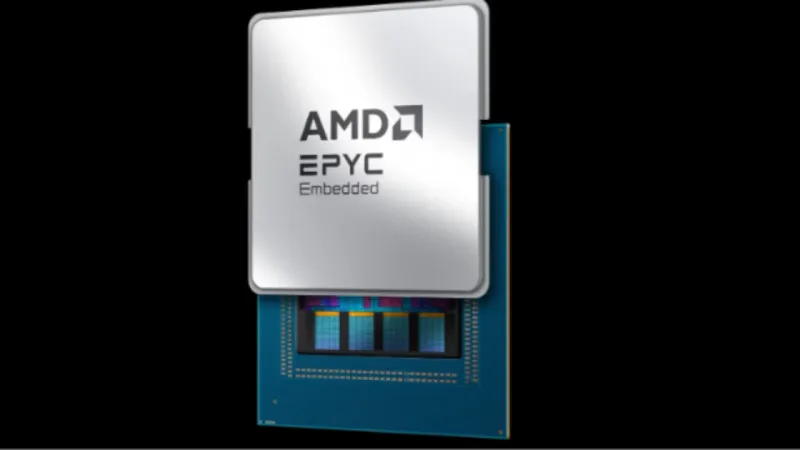
AMD has introduced its 6th Gen EPYC Embedded 9006 Series processors, featuring up to 256 Zen 6 cores, 16 DDR5 memory channels, and PCIe Gen 6 connectivity for specialized enterprise systems.
Announced on November 10, 2026, the new lineup addresses the growing complexity of AI infrastructure by providing data-center-class computing capabilities in embedded systems. The processors are designed for equipment that must operate reliably over long periods, particularly in semiconductor testing, enterprise storage, and network security applications.
Zen 6 Architecture Boost
The EPYC Embedded 9006 Series introduces AMD's Zen 6 architecture with six models ranging from 64 to 256 cores. The flagship EPYC Embedded 9976 supports 256 cores and 512 threads, offering significantly higher processing capacity for demanding workloads. AMD claims up to 1.8 times higher throughput compared with the previous generation based on specific test conditions.
Memory Bandwidth Expansion
A major improvement is the expanded memory architecture, supporting 16 DDR5 memory channels compared to 12 in the previous generation. The processors support RDIMM speeds of up to 8,000 MT/s and MRDIMM speeds of up to 12,800 MT/s, with AMD claiming up to 2.7 times higher memory bandwidth. MRDIMM technology is designed to increase data-transfer rates for processing large datasets.
Connectivity Advancements
The new series supports up to 96 PCIe Gen 6 lanes operating at 64 GT/s per lane, alongside CXL 3.1 connectivity. While PCIe Gen 6 offers twice the per-lane transfer rate of PCIe Gen 5, the new platform has fewer available lanes (96 compared to 160 in the previous generation). AMD claims up to 1.5 times higher I/O bandwidth, though this is a manufacturer estimate.
Performance and Security
AMD reports up to 1.3 times higher firewall throughput in DPDK L3FWD packet-forwarding tests and up to 1.5 times higher performance on selected ISA-L operations. The processors feature a layered security architecture with AMD Root of Trust, AMD Security Processor, and Caliptra, including post-quantum cryptographic firmware signing. AMD is committing to seven years of product longevity for the series.
Related
