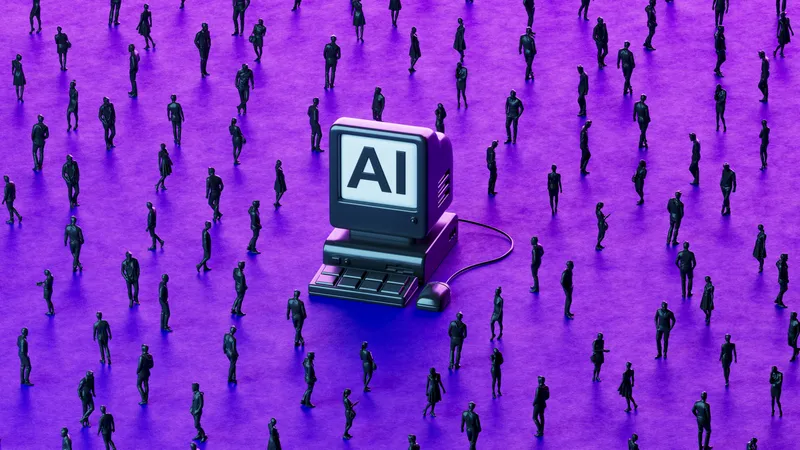
Dead internet theory explained: are bots taking over the web? - eGamers.io
Cybersecurity group Thales reported that bots now account for 53 percent of all web traffic, up from 51 percent the previous year, according to a 2026 report.
The finding supports the 'dead internet theory,' which suggests that bots and non-human agents now drive most of the internet. The theory began in the late 2010s as a conspiracy theory on forums and gained clearer form in 2021 with a post on Agora Road titled 'Dead Internet Theory: Most of the Internet Is Fake.'
Supporters claim the internet 'died' around 2016, when search engines and social media feeds began pushing more AI-generated content. The theory posits that bots have since evolved to operate without human involvement.
AI's growing capabilities are a key driver. OpenAI said in September 2026 that it had solved the Navier-Stokes problem, a notoriously difficult mathematics puzzle. This advancement has enabled bots to run with no people involved, such as Meta's purchase of Moltbook, a social network where AI chatbots talk to each other.
Chatbot Adoption Climbs
The widespread use of chatbots is creating a 'chatbot loop' where humans are increasingly removed from the process. A student might use AI to write an essay, and a teacher could use AI to grade it. Job hunters use chatbots to produce resumes and cover letters, which are then screened by AI systems.
the Internet feels empty and devoid of people
Adoption has risen sharply. In 2024, just 33 percent of Americans used chatbots like ChatGPT, Gemini, or Copilot. By 2026, that figure had climbed to 49 percent, with 25 percent using them daily.
Disinformation and Detection
The rise of automated content is a major concern, particularly for disinformation. Bots can push false claims that cause real damage, and AI chatbots are becoming a growing source of election disinformation. Lawmakers have done little to regulate the problem, despite government warnings about AI threats to free elections.
The public mood is shifting, with 40 percent of Americans expecting AI to have a negative effect on society over the next 20 years. In response, a detection industry is emerging. Pangram raised $9 million in July 2026 for its AI detection system, and OpenAI began watermarking AI-generated content after the EU AI Act passed.
Related
