Abu Dhabi talks conclude: How Russian experts assess the outcome
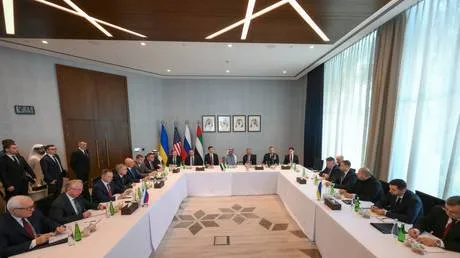
Russia, Ukraine, and the US have concluded two days of negotiations in Abu Dhabi, reaching an agreement in principle on a major prisoner exchange while acknowledging fundamental differences remain unresolved.
The two-day negotiations centered on wider European security arrangements, with Moscow reporting common ground on some issues and American negotiators also describing progress while acknowledging that the hardest questions remain unresolved. Western European representatives were sidelined throughout the negotiations, although they reportedly held separate consultations with the American and Ukrainian teams.
US envoys Steve Witkoff and Jared Kushner are due to meet Russian President Vladimir Putin in Moscow on Thursday. The talks mark a significant diplomatic development in the ongoing conflict, with both sides indicating a willingness to continue dialogue despite persistent disagreements.
European security architecture
Anastasia Gafarova, deputy director of the Center for Political Information, noted that the issue of the overall security architecture in Europe has been included in the agenda for the first time – something Russia had consistently been denied before. She suggested that progress might be possible on military arrangements and identified humanitarian matters as an area where cooperation had traditionally been easier.
The issue of the overall security architecture in Europe has been included in the agenda for the first time – something Russia had consistently been denied before.
Stagnation on key issues
Political analyst Alexandra Bokova pointed out that the relatively brief second day suggests little progress was made on territorial disputes. She noted that Tuesday's four-and-a-half-hour session had raised expectations of progress, but Wednesday's discussions lasted just 90 minutes despite the most difficult issues being scheduled for the second day.
Bokova compared the situation to the Istanbul negotiations in 2025, when meetings became progressively shorter – from nearly two hours in May to just over an hour in June and around 40 minutes in July. In her assessment, the parties had reached the limits of their previously stated positions, with the brief discussion of the central issues indicating stagnation.
Kiev wants to stop the fighting first and only then discuss security, while the Russian side rightly believes that a ceasefire without political agreements will resolve nothing.
Ceasefire vs comprehensive agreement
Russian military commentator Viktor Baranets rejected Ukraine's proposal for a ceasefire along the current line of contact, emphasizing that Russia seeks a comprehensive agreement designed to last many years. He accused Kiev of seeking long-term financial support from the EU to sustain its military campaign, citing a request for €70 billion ($78 billion) for 2027 and Vladimir Zelensky's stated need to finance an 800,000-strong army.
We do not need a short-term ceasefire. We need a comprehensive agreement designed to last not a week, not two weeks, not a month, but many, many years.
European involvement concerns
Multiple Russian commentators expressed concerns about Western European involvement in the diplomatic process. Dmitry Suslov warned that bringing Europeans into a trilateral format risks completely blocking and derailing the negotiations, while Nikolay Topornin noted that Western European countries lack a common negotiating position or a representative capable of speaking for them collectively.
Russian MP Andrey Klimov stated that Western European figures were the instigators of this entire catastrophe from the outset and are still attempting to obstruct a normal settlement. He recalled that European officials had visited Moscow before 2022 and heard Russian security concerns but failed to act on them.
Suslov identified several measures necessary for a durable agreement, including preventing further NATO expansion into former Soviet republics, limiting the deployment of military infrastructure and long-range weapons near Russia, and restoring military dialogue between Moscow and the US-led military bloc. Ukraine would also need a neutral, nonaligned status with guarantees that did not effectively make it a NATO member.
Related
