Trump administration to pursue public land sales and a decrease in federal ownership
President Donald Trump's administration plans to sell public lands to states, tribes and local governments as part of a five-year strategy to shrink the federal estate, the Interior Department announced.
The proposal, presented by the Interior Department, calls for strategic land transfers and exchanges to support greater energy production, a key part of the administration's pro-fossil fuel agenda. The plan reflects a view that public lands are assets to be used, not preserved.
Interior officials said a portion of any land sale proceeds would go back to the buyer for conservation purposes elsewhere. They offered no details on what lands could be sold, nor the scope or location of potential sales.
The Interior Department oversees more than 750,000 square miles of land, an area greater than Texas and California combined, along with vast underground mineral reserves. This puts the agency at the center of a contentious, decades-long debate over federal land control.
Political opposition
The plan drew quick objections from some lawmakers, including Republican Rep. Ryan Zinke of Montana, who was Interior Secretary in Trump's first term. Zinke’s office said he remains firmly opposed to the sale or transfer of public lands.
These lands belong to the American people, not private interests looking to cash in. Public lands belong in public hands.
Zinke will vote against any legislation on the issue if it happens before the lawmaker leaves Congress at the end of this term. The ranking member of the Senate Natural Resources Committee also pledged to fight any federal land sales or privatization efforts.
Historical context
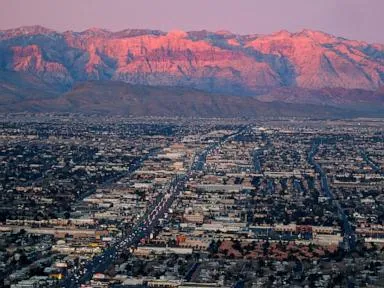
Most public lands are in Western states, where the government controls the vast majority of land in places like Nevada, which is almost 80% under federal control. This protects the land from exploitation but can also hinder local growth.
Some Western lawmakers last year sought to sell vast tracts of land in Utah and Nevada, saying that could generate revenue and ease growth pressures in booming cities. Among the proposals, Utah Republican Sen. Mike Lee suggested selling more than 2 million acres to states or other entities.
Those efforts failed amid bipartisan opposition. The plan sets out a road map for the Interior Department's priorities and actions between 2026 and 2030, but future administrations would not be bound by it.
Related
