U.S. brokers Ukraine-Russia prisoner swap, but peace not in sight
U.S.-mediated talks in Abu Dhabi have secured the largest prisoner exchange between Russia and Ukraine in nearly five years, but the war continues as Vladimir Putin insists on recognizing Russia's territorial seizure.
U.S. officials announced the agreement to finalize the largest prisoner exchange between Russia and Ukraine during talks in Abu Dhabi. The deal, reached after two days of negotiations, is a significant humanitarian step but does not signal an end to the war.
The talks were held in the United Arab Emirates, a neutral ground that has sought to mediate between the two warring nations. The U.S. delegation, led by Jared Kushner and Steve Witkoff, worked to revive Washington's stalled peace efforts.
One of the positives is we agreed that we're going to have the biggest humanitarian release of prisoners, which we're going to finalize the numbers tomorrow.
Key obstacle remains
Despite the prisoner swap, a major breakthrough on a broader peace deal remains elusive. Russia's demand to have its seizure of a large swath of eastern Ukraine recognized as legitimate is a key hurdle.
Vladimir Medinsky, the head of the Russian delegation, said the talks moved the sides closer to peace. However, he emphasized that much would depend on the positions of Ukraine and the U.S., as well as on "whether Europe will come to its senses."
U.S. officials have been determined to revive peace efforts, which have so far failed to deliver significant results. The talks in Abu Dhabi were the first between the delegations in nine months.
Next steps in diplomacy
The U.S. envoys, Kushner and Witkoff, are set to travel to Moscow on Thursday to meet with Putin. They will then fly to Dublin to meet with Ukrainian President Volodymyr Zelenskyy.
Putin's senior aide Yuri Ushakov confirmed the envoys' arrival in Moscow on Thursday morning. He said the results of the Abu Dhabi negotiations were yet to be fully understood in Moscow, but that Russia believed Kushner and Witkoff were "bringing something with them."
Zelenskyy acknowledged the prisoner exchange agreement and said the delegations had discussed their views on guaranteeing security. He emphasized that the first step must be ending the war and providing security guarantees for Ukraine.
Ukraine's priority is to end the war as soon as possible with a dignified peace. We believe that Europe must be represented at every stage of real diplomacy.
Ukraine rejects territorial concessions
Zelenskyy balked at a U.S. request for Ukraine to accept territorial concessions in exchange for security guarantees. He argued that accepting the loss of the Donbas would not stop Putin, who might return in a year or two.
The Ukrainian president stressed the need for practical mechanisms to prevent any recurrence of the war. He said the U.S. must exert strong influence on Russia, the source of the conflict.
Representatives of European governments, the European Union, and NATO were in Abu Dhabi and consulted with the Ukrainian delegation. Moscow has said it does not want European countries involved in direct negotiations.
War continues on the ground
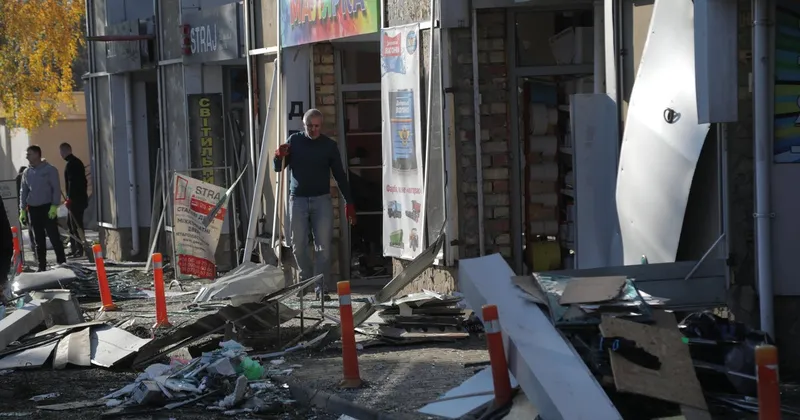
While diplomacy advances, the war on the ground continues unabated. Russia struck the southern Zaporizhzhia region and the eastern city of Kharkiv overnight, wounding seven civilians and damaging property.
Another strike hit a busy market in the southern region of Odesa, killing three people and injuring 11 others, according to regional governor Oleh Kiper. Russia's Defense Ministry said its air defenses downed 627 Ukrainian drones overnight.
The drones started a fire at the port of Ust-Luga, one of the main facilities for Russian oil exports, injuring three workers. Fighting on the front line in eastern Ukraine has seen little territory change hands this year.
Related
