AMD introduces Epyc 6 processors for AI agent workloads - SiliconANGLE
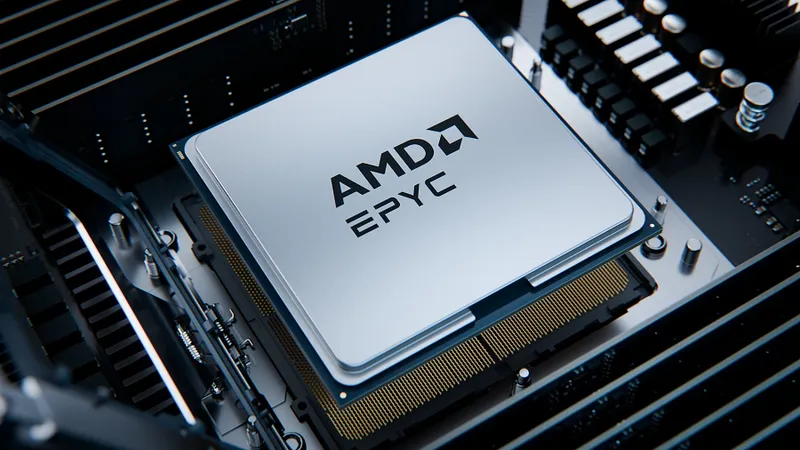
Advanced Micro Devices Inc. has introduced the Epyc 6 series server processors, optimized for AI agent workloads and offering performance improvements over competitors.
The Epyc 6 series, also known as Venice, comprises 10 CPUs organized into two groups. The first set includes chips with many relatively slow cores, while the remaining CPUs feature fewer, higher-frequency cores. Both collections feature optimizations designed to speed up artificial intelligence agents.
AI agents run their neural networks on graphics cards and use CPUs to power their tools and applications. CPUs also perform certain other tasks in machine learning clusters. According to AMD, Epyc 6 chips can support up to 3.3 more agents per watt than Nvidia Corp.'s Vera CPU and outperform comparable Intel Corp. silicon.
Performance and efficiency
The two highest frequency Epyc 6 chips have a base speed of 4.05 GHz and can boost to 5.3 GHz for demanding workloads. Both chips have 96 cores and a 384-megabyte cache. The two densest chips include 256 cores with a base speed of 2.55 GHz, enabling 512 threads for running numerous AI agents simultaneously.
Deploying AI agent tools on CPUs with fewer cores can reduce software expenses in some cases. Certain enterprise applications, notably databases, are billed according to the number of cores, making deployment on one high-frequency core cheaper than using two slower ones with equivalent processing power.
Zen 6 architecture
The Epyc 6 series is based on Zen 6 architecture, which has an IPC (Instructions Per Clock) 31% higher than AMD's previous design for AI workloads. This improvement comes from using Taiwan Semiconductor Manufacturing Co.'s latest two-nanometer node. The architecture includes two editions: Zen 6 optimized for clock speed and Zen 6c for high core counts.
Zen 6c features an enhanced out-of-order processing mechanism that performs calculations before results are needed to save time. The architecture also includes AI-specific optimizations like compatibility with FP16 data format for compression and improved support for VNNI-INT8 technology.
Market deployment
AMD reports that major data center suppliers have already begun shipping servers equipped with Epyc 6 chips. The processors also power Microsoft Azure instances optimized for AI inference workloads and chip design software, indicating strong early adoption in the enterprise market.
Related
