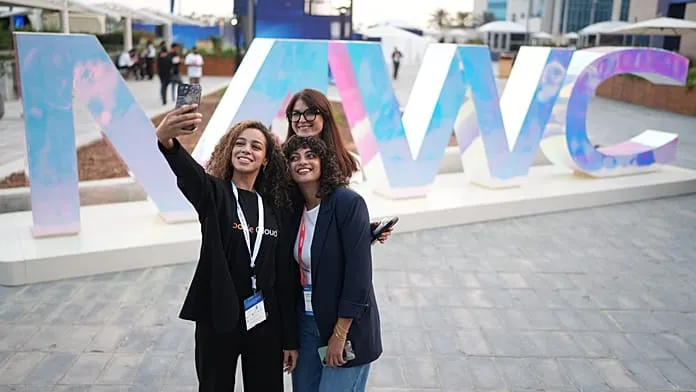
MWC26 Doha: Mobile economy in MENA set to reach €421bn, but millions remain offline
The Middle East and North Africa's mobile economy is projected to reach €421 billion by 2030, but millions remain offline despite living in areas covered by mobile networks.
The Middle East and North Africa's mobile economy is projected to reach €421 billion by 2030, but millions remain offline despite living in areas covered by mobile networks. Mobile technologies and services generated an estimated €340 billion in economic value in 2025, supporting 2.2 million jobs and contributing around €35.8 billion to public finances.
The figures highlight a challenge that extends beyond infrastructure: ensuring people can afford, access and use the technology available to them. This year's MWC26 Doha carries added significance as it takes place alongside the International Telecommunication Union's Plenipotentiary Conference, the first time the two events are being held at the same location.
The gatherings bring industry leaders and policymakers together at a critical time when decisions on connectivity standards, digital infrastructure and technological governance will help shape how the global digital economy evolves. The event is being held in partnership with Qatar's Ministry of Communications and Information Technology.
Building the infrastructure behind the AI boom
As AI systems rapidly evolve to carry out more complex tasks autonomously, the industry faces growing pressure to provide the computing power, capacity and resilience needed to support them. Qatar's Minister of Communications and Information Technology, Mohammed bin Ali Mannai, noted the rise of AI agents is increasing the need for more resilient networks and advanced computing capabilities.
Progress only counts if everyone shares in it. That means two things: global standards that keep networks, services and devices working across borders, and a concerted effort to connect the people who are still offline.
Badrinath acknowledged that the industry had not done well in the past year to make mobile connectivity more affordable. 'A year ago, we were hoping to be able to bring to the market smartphones in the $50 range. That's very much impossible today with the increase of RAM prices driven by the huge demand for AI,' he said.
Narrowing the digital divide
Extending network coverage alone will not be enough to prevent a second digital divide if governments and policymakers do not commit to removing barriers like smartphone affordability, access to data packages, and digital skills. These barriers risk becoming more consequential as AI reshapes industries and workplaces.
Assistant Resident Representative at UNDP Egypt Abeer Shakweer emphasized that women, persons with disabilities, people in remote and rural areas, and vulnerable young people are most at risk of being left behind. 'Through acceleration programmes that expand access to financial services and new markets, we help empower young entrepreneurs and innovators as real contributors to growth,' she said.
Turning connectivity into everyday value
Mobile wallets and digital payments platforms are giving people and businesses new ways to send and receive money, allowing merchants to reach more customers and manage transactions more easily. Mirko Giacco, CEO of Ooredoo Fintech, highlighted how his company is prioritizing underserved communities in the MENA region.
In Qatar, more than 20% of the market share international remittance goes through our products. That means we give users, migrant workers that are here, the tools to send money back home. They do it with us in a way that is safe, convenient, and economically viable.
The GSMA's 5G Monetisation MENA report found that 17 of the region's 24 markets had launched commercial 5G services by September 2026, while 5G connections are expected to rise from 67 million in 2025 to almost 350 million by 2030. GSMA projects that operators will invest around €80 billion across MENA between 2025 and 2030.
Related
