Apple’s $2,899 MacBook PROLED hides a massive unified memory bottleneck — why I think power users should abandon macOS for Nvidia RTX Spark and AMD Strix Halo - Tom's Guide
Apple's new $2,899 MacBook Pro with PROLED XDR display features only 24GB of unified memory, creating a bottleneck for power users running local AI applications.
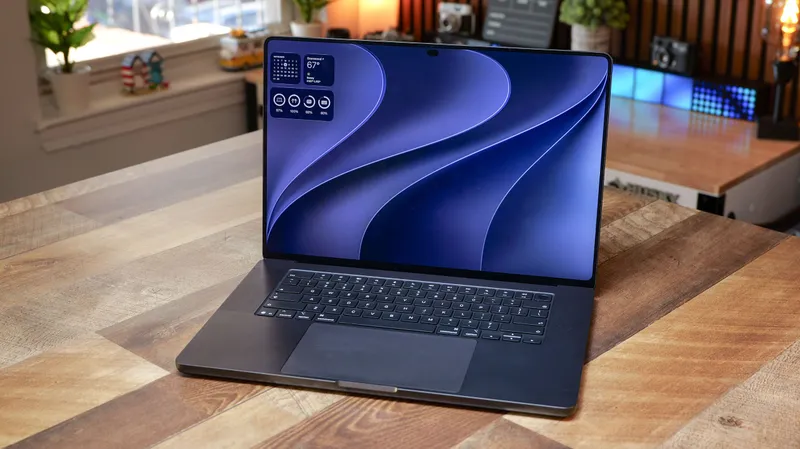
While Apple's new MacBook Pro has garnered attention for its impressive PROLED XDR display with flawless color calibration and up to 2,000 nits of peak brightness, a critical limitation lies beneath the surface. The $2,899 laptop comes equipped with only 24GB of unified memory, creating what tech experts are calling a significant bottleneck for power users looking to run advanced local AI applications.
Memory shortage concerns
The industry is currently experiencing what some have dubbed 'RAMageddon,' a severe memory shortage driven by enterprise data centers hoarding silicon resources. Apple's response to this challenge has been to maintain a premium pricing strategy while offering minimal memory allocation, making the MacBook Pro more of a luxury item than a practical tool for next-generation computing needs.
Apple didn't build a machine for the next generation of computing (local AI). They built a $2,899 luxury item.
Windows alternatives offer more value
While Apple focuses on design elements like the Dynamic Island and touchscreen interface, the Windows ecosystem has been developing more cost-effective solutions for AI workloads. Microsoft's Surface Laptop Ultra, equipped with Nvidia's RTX Spark, demonstrates superior performance in AI benchmarks compared to the MacBook Pro's M5 chip, despite having similar memory configurations.
Benchmark tests reveal that the RTX Spark system processes tokens at a faster rate than Apple's M5 Pro, with 61.26 tokens per second compared to 52.69 for the MacBook Pro in certain AI tasks. This performance advantage comes at a comparable price point, making Windows-based machines more attractive for AI-intensive workloads.
AMD's competitive offering
AMD's Strix Halo processors have emerged as formidable competitors in the AI computing space, offering significant capabilities at more competitive price points. For users who desire an OLED display without Apple's premium pricing, options like the MSI Prestige N16 Flip AI+ provide similar display technology at $6,799, which is $300 less than Apple's equivalent model.
The article highlights that Apple's MacBook Pro excels in display quality and battery life but falls short in providing the necessary memory infrastructure for local AI applications. As the industry moves toward decentralized AI processing, systems with larger memory pools and more powerful compute capabilities become increasingly essential for power users and developers.
Related
