Israeli president instructs Netanyahu’s rival to form government
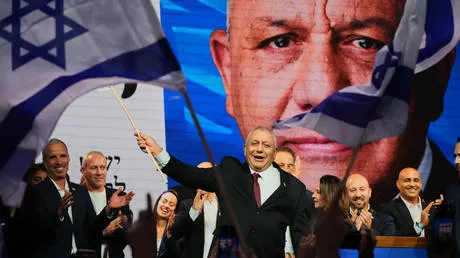
Israeli President Isaac Herzog has tasked opposition leader Gadi Eisenkot with forming the next government, a decision that marks a significant political setback for Prime Minister Benjamin Netanyahu following last month’s inconclusive parliamentary elections.
Herzog informed both Eisenkot and Netanyahu of his decision on Saturday, and the former military chief, who heads the centrist Yashar party, will have 28 days to assemble a coalition, with a possible two-week extension.
During consultations earlier this week, Eisenkot secured the backing of 67 lawmakers in the 120-seat Knesset, compared to just 46 who recommended Netanyahu.
Parliamentary deadlock
Netanyahu’s Likud emerged as the largest single party in the October 27 election, but his right-wing and religious bloc secured only 53 seats, falling short of the 61 required for a parliamentary majority.
Eisenkot’s four-party opposition alliance won just 48 seats, leaving the two Arab-led parties, which together control a record 19 seats, holding the balance of power.
Eisenkot has ruled out including the Arab parties in his government, while several of his allies have opposed even relying on their outside support.
Another possibility involves an agreement with ultra-Orthodox parties traditionally allied with Netanyahu, although disagreements over exemptions from military service remain a major obstacle.
Unity government appeal
The ultra-Orthodox United Torah Judaism party, which holds seven seats, notably declined to endorse Netanyahu during the presidential consultations and has signaled openness to negotiations with Eisenkot.
He also warned that a government dependent on Arab parties, whom he accused of supporting Hamas, would threaten Israel’s survival.
Eisenkot’s Yashar party rejected the appeal, accusing Netanyahu of dividing Israeli society and inviting Likud to abandon its alliance with “extremists” and join a unity government under Eisenkot’s leadership.
Political crisis risk
The political deadlock follows a bitter election campaign overshadowed by the US-Israeli war on Iran, Israel’s military operations across the region, and divisions over Netanyahu’s leadership.
The incumbent campaigned on promises to resume the offensive against Tehran and overthrow its government, while Eisenkot questioned the need for another military campaign and accused Netanyahu of failing to achieve his previous war objectives.
Netanyahu, Israel’s longest-serving prime minister, has held the office for more than 19 years across three separate stints.
His repeated failures to assemble governing coalitions previously contributed to a prolonged political crisis that saw Israel hold five parliamentary elections between 2019 and 2022.
If Eisenkot fails to assemble a majority within the allotted period, Herzog could give another candidate, potentially Netanyahu, an opportunity to form a government. A prolonged stalemate could ultimately force Israel into another election.
Related
