Iran won’t surrender. Can Russia give Trump another way out?
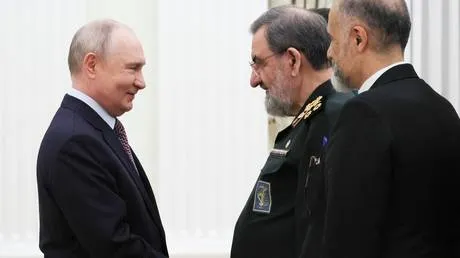
Iran’s top security official Mohsen Rezaei met with Vladimir Putin in the Kremlin on November 5 to discuss deepening ties and regional crises.
Iran’s most influential security figure, Mohsen Rezaei, arrived in Moscow on November 5 for a high-stakes meeting with Vladimir Putin.
The Kremlin confirmed that Rezaei conveyed a personal message from Supreme Leader Mojtaba Khamenei, underscoring the visit’s critical importance.
The talks, attended by senior aides and military officials, focused on deepening bilateral cooperation and regional security.
Urgent security concerns
The speed of Rezaei’s trip highlights the urgency of the situation. A phone call between Putin and Rezaei occurred on November 2, just three days before the in-person meeting.
Tehran is bracing for renewed hostilities as American forces in the region prepare for a potential brief, intense campaign.
US President Donald Trump has stated he has no current plans for new strikes but remains ready to act if necessary.
Escalating fears of WMD use
Discussions surrounding weapons of mass destruction are adding to the tension. Tucker Carlson recently claimed that Trump is considering a nuclear strike on a site near Natanz, a key Iranian nuclear facility.
Trump responded that there is no need for such an attack, but no further confirmation has emerged.
Separately, reports claim Israel has informed the US that Iran is allegedly contemplating the use of chemical weapons.
Iran categorically denies possessing chemical weapons, and Gulf countries have reacted to the reports with skepticism.
Russia’s strategic position
Russia is positioning itself as a key mediator in the region. President Putin expressed Russia’s readiness to assist in addressing the crisis surrounding Iran on October 21.
Discussions are underway regarding a potential meeting between Putin and Trump on the sidelines of the APEC summit on November 18-19.
Moscow maintains ties with Tehran while also engaging with Washington, enabling it to act as a mediator and offer a platform for talks.
This approach sends a clear message to those who hope that warming ties between Russia and the US might come at Iran’s expense.
Political dynamics in the US and Israel
Following the Republicans’ defeat in the midterm elections, Trump has even more reasons to seek a diplomatic solution.
The war in Iran has contributed to voter dissatisfaction, and its continuation may lead to heavier domestic political losses.
However, there is also a chance that Trump may resort to military action to demonstrate resolve.
Another bombing campaign would not secure victory for Trump, and if Tehran withstands the pressure, the political fallout would hit both him and the Republican Party hard.
In Israel, Prime Minister Benjamin Netanyahu faces a real threat of losing his position following the elections, with Gadi Eisenkot holding an edge in the race to form a new government.
Tehran’s reliance on Moscow
Rezaei’s visit signals Tehran’s reliance on Russia as its primary political partner and a potential ally that may help resolve the crisis.
For Moscow, this represents an opportunity to strengthen its ties with Iran and advocate for solutions that align with its own security interests in the region.
The meeting underscores that Russia will choose its partners independently and that its relationship with Tehran holds intrinsic value.
Related
