Over 400,000 workers strike across Germany (VIDEOS)
More than 413,000 workers across Germany's industrial sector have participated in strikes and rallies this week, demanding higher wages and job security after three rounds of wage talks failed.
Germany's largest union reported more than 2,800 actions nationwide since Sunday, hitting carmakers, engineering companies, metal producers, and suppliers. IG Metall is demanding a 5% pay rise over 12 months for 3.7 million workers, higher apprentice wages, job guarantees, and profit-sharing at profitable companies.
Employers have offered a one-off payment in 2027 and a 1.3% raise starting in July 2028 – which the union says amounts to a pay cut in real terms. The strikes come as Germany's industrial sector faces significant challenges including soaring energy costs, weak investment, and competition from China.
Walkouts hit industrial giants
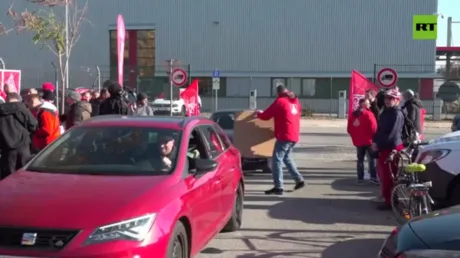
New strikes hit more than 30 companies in and around Nuremberg on Friday, including Bosch, Siemens, MAN Truck & Bus, and Schaeffler. Footage from a Bosch plant shows workers blocking access, waving placards reading "Honk for the future" and "Honk for five percent." The protest came as Bosch plans to cut more than 900 jobs at the facility by 2029.
The dispute goes beyond pay, demanding binding guarantees for jobs, production, and investment.
In Saxony, Siemens and Thyssenkrupp workers staged a four-hour stoppage in Chemnitz, gathering outside the Siemens plant for a joint rally. A day earlier, around 6,500 Audi workers walked out at the Neckarsulm plant in southwestern Germany, fearing the plant could close by 2034 without a long-term production plan.
Wider European unrest
The walkouts are part of a wider wave of strikes and labor protests sweeping Europe. In France, hundreds of thousands protested on Thursday for higher pay and public investment, disrupting transportation and schools. Spain faces a nationwide general strike on November 11 following weeks of protests over soaring rent and evictions.
In Ireland, more than 300,000 public-sector workers are preparing to strike on November 12 after pay talks collapsed, coinciding with a major European leaders' summit in Dublin. The strikes coincide with wider protests across Europe over stagnant wages, rising living costs, strained public services, and rising military spending.
Germany's industrial decline
Germany's once-mighty industrial sector has been hit hard by soaring energy costs following the loss of cheap Russian oil and gas, weak investment, US tariffs, and fierce competition from China. Factories are closing, production is moving abroad, and industrial giants including Volkswagen, Bosch, and Mercedes-Benz are cutting thousands of jobs.
In July, the Federation of German Industries (BDI) called the situation critical, warning that around 15,000 industrial jobs disappear every month, with 177,000 manufacturing positions lost over the previous year. Talks resume on Monday in Bavaria, North Rhine-Westphalia, and Saxony, with the union threatening longer, potentially 24-hour walkouts unless employers improve their offer.
Related
