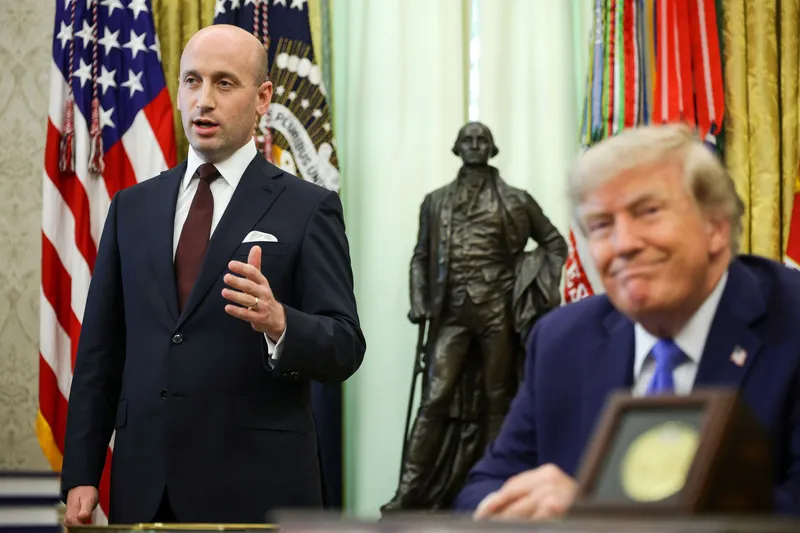
How Stephen Miller Schemed His Way to the Top
President Donald Trump announced that Stephen Miller will become the new White House chief of staff, replacing Susie Wiles following Republican midterm losses.
President Donald Trump announced on Friday that Stephen Miller, one of his most powerful and politically aggressive aides, would be his next White House chief of staff following disastrous results for Republicans in the midterm elections. Miller, whose titles until now were deputy chief of staff for policy and homeland security adviser, has orchestrated the most polarizing policies of Trump's second term—most notably a brutal crackdown on immigration that has claimed the lives of US citizens.
Midterm Fallout
Trump made the change public in a statement on his Truth Social platform, writing that Miller would take over from Wiles on Monday—less than a week after Republicans lost the House and Senate in a searing rebuke of Trump's policy agenda. In recent days, Trump has privately blamed Wiles for the worst Republican midterm performance in decades, according to two sources familiar with the matter.
Serving President Trump in the White House has been the honor of a lifetime. I'm so proud to have been a part of what we've accomplished together from securing our border and cutting taxes to strengthening our economy and putting America First.
Miller's Rise
Trump broadly considered three candidates to replace Wiles: special envoy Steve Witkoff, director of national intelligence Jay Clayton, and Miller. With the looming threat of congressional investigations starting next year, Trump settled on Miller, seemingly because of his zeal in defending the president and his deep loyalty. Miller has been with Trump since his first campaign and stood by him through his political exile in 2021.
Miller had made his interest for the job known inside the West Wing for weeks, ever since Wiles weathered a series of negative stories before the midterms that suggested her job was at risk. Trump also started cutting Wiles out of certain decisions, which contributed to the sense among her detractors that she was on shaky ground.
Shakeup Ahead
With Wiles' departure, White House aides were bracing for further personnel changes. Among other names, Wiles' deputies James Blair, who put together the GOP midterm strategy, and Richard Walters are seen as vulnerable to being fired by Miller unless they resign first. The changing of the guard also is likely to bring respite to defense secretary Pete Hegseth, who has had a strained relationship with Wiles as of late but is seen as ideologically aligned with Miller.
Related
