AI Is Booming. So Why Is the Nasdaq Bleeding?
The Nasdaq Composite dropped approximately 5.5% on November 5 as investors reassessed the potential impact of tighter AI regulations following the 2026 US midterm elections.
The recent selloff in the Nasdaq appears to be less about a collapse in AI demand and more about a repricing of expectations. Investors are beginning to recognise that while AI may deliver powerful long-term growth, the near-term cost of building that future is extremely high.
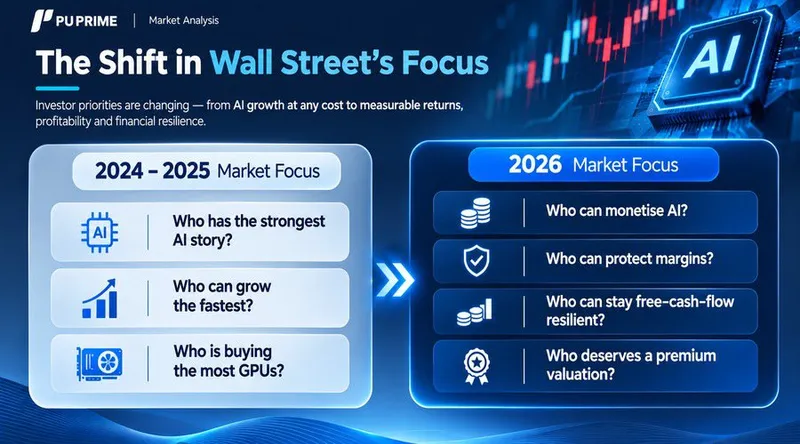
The market is increasingly focused on profitability, capital efficiency and free cash flow, rather than growth stories alone. In other words, Wall Street is moving from AI excitement to AI accountability.
US Midterm Elections Spark Global Equity Selloff
Global equity markets experienced a sharp selloff following the 2026 US midterm elections on November 3, as Democrats secured majorities in both the Senate and House of Representatives.
Although Wall Street initially rallied, sentiment reversed sharply as investors reassessed the potential impact of tighter AI regulations and restrictions on data-centre expansion.
The primary concern is that greater regulatory scrutiny could slow AI infrastructure investment, potentially weakening demand for semiconductors and cloud computing services.
While tighter AI regulations have not yet been implemented, the election outcome has introduced additional policy uncertainty. Combined with existing concerns over elevated technology valuations and massive AI spending, political developments have intensified fears over the sustainability of the AI-driven equity rally.
These fears intensified selling pressure on November 5, with the Nasdaq Composite plunging approximately 5.5% and the Philadelphia Semiconductor Index tumbling 12.2%.
The selloff subsequently spread across Asian markets on November 6, with South Korea's KOSPI declining more than 8% in early trading and Japan's Nikkei falling approximately 5%.
Why the AI Sector Is Under Pressure
For most of the past two years, AI-related stocks benefited from a highly supportive narrative: explosive demand for AI chips, expanding cloud revenue, rapid enterprise adoption and expectations of a new productivity cycle.
That narrative pushed valuations higher across semiconductors, software and cloud infrastructure names. However, the latest earnings season revealed a growing tension between AI growth and AI economics.
Many of the biggest technology companies are still growing. Yet they are also spending aggressively on data centres, GPUs, infrastructure, engineering talent and model development.
These investments are enormous, and in many cases they are rising faster than companies’ ability to convert that spending into cash returns. That is now becoming the market’s main concern.
Share Prices Rose Faster Than Financial Proof
The most important takeaway from the recent selloff is that some technology stocks may have been priced for near-perfect outcomes. When a company’s share price rises much faster than its revenue, earnings or cash flow, future expectations become extremely demanding.
In that situation, even a good earnings report may not be enough. If revenue growth slows slightly, margins fail to expand, or management offers cautious guidance, investors can quickly reduce the valuation multiple they are willing to pay.
This is where metrics such as P/E ratio, price-to-sales, free cash flow and capital expenditure intensity become more useful than revenue growth alone.
Related
