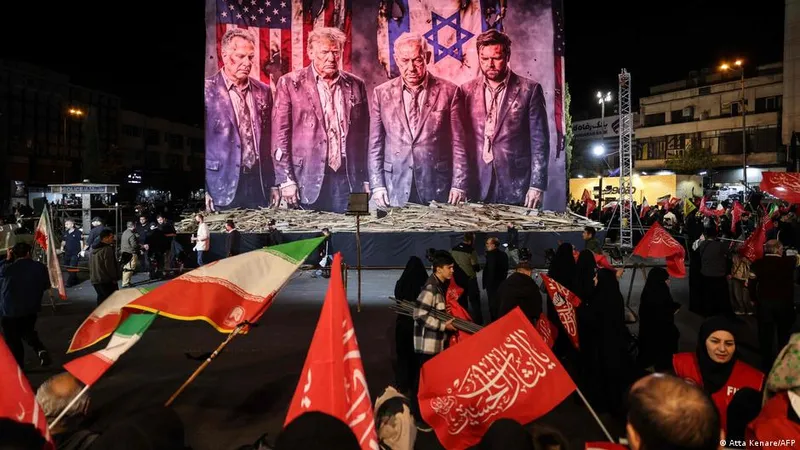
Americans voted against Trump's Iran war. Gulf countries hope that means an end to the conflict
President Donald Trump acknowledged that the US war with Iran likely contributed to his party's resounding defeat in the midterm elections, as voters rejected the impact of conflict on gas prices.
After his party's resounding defeat in the US midterm elections, President Donald Trump conceded that the war with Iran had likely played a part in the outcome. I think a part of it was Iran, but, at the same time, people understood the importance of what I've done with Iran, Trump told Fox News, acknowledging that US voters were unwilling to accept the impact of the war on gas prices.
Election Impact on Military Plans
Observers note that the United States and Israel had been delaying major attacks on Iran until after both countries' elections. The Wall Street Journal reported in late October that the Trump administration was warning Gulf state governments to prepare for a short, intense military campaign following the midterms.
While foreign policy remains a presidential prerogative, analysts suggest that a Congress controlled by Democrats could potentially withhold funding for Trump's military expeditions. However, newly-elected Democratic officials won't assume their seats until early next year.
Two US political science professors writing in Foreign Affairs magazine noted that lame duck presidents—those who lose control of Congress and can't run for another term—often increase international interventions. As they think about their legacy, lame ducks often turn to foreign policy, where the power of the presidency allows them to act unfettered by pesky domestic politics, they explained.
Iran's Unpredictable Response
Trump has told media outlets he is in no rush to resume bombing Iran, while Iranian officials have declared readiness for any attack. Senior Iranian rhetoric suggests they may target a wider range of targets than previously, including regional energy infrastructure, undersea telecommunications cables, and data centers.
Some experts believe Iran deliberately delayed actions to pressure Trump before the midterms, potentially making them more willing to negotiate a peace deal now that the election is over.
Gulf States Seek Alternatives
Gulf states, primary targets of Iranian attacks, find themselves in a difficult position. We find ourselves drawn within a crisis that we worked diplomatically very hard to try to avert, said Anwar Gargash, foreign policy adviser to UAE leadership. We are clearly seeking a political off-ramp.
Qatar has attempted to mediate between the US and Iran while conducting emergency drills at its airport. The UAE has performed similar exercises, while Saudi Arabia faces potential war on two fronts with attacks from Houthi militia in Yemen. Egypt has reportedly strengthened air defenses around the Suez Canal.
The conflict has caused Gulf states to reassess defense partnerships with the US. There is widespread disappointment across the region with the US over the folly of the war, the erratic nature of Washington's military and diplomatic conduct, and its decision to prioritize Israel's defense over that of its Gulf partners, noted Hasan Alhasan of IISS.
Strategic Realignment
Gulf states are expanding their outreach, with the UAE strengthening ties to Israel and Saudi Arabia entering the Mecca defense pact with Pakistan and Turkey. The Gulf states have already moved toward strategic autonomy and self-reliance, wrote Andreas Krieg of King's College London. A lame-duck Trump will speed that process.
However, meaningful Gulf unity appears unlikely, according to former US ambassador Ryan Crocker. I'm afraid that meaningful Gulf unity is not coming to a theater near us anytime soon, he said, citing persistent differences between regional states.
In the long term, Gulf states may eventually develop some understanding with Iran. The Gulf states understand that they probably can't buy their security only from Washington, and that they're going to have to buy it, to some degree, by some kind of a relationship with Tehran, Harrison concluded. It's inevitable. Geography reigns.
Related
