Will US midterm election results spare Gulf states from further war?
President Donald Trump acknowledged the Iran war influenced his party's midterm defeat, with observers noting the US and Israel delayed major attacks until after elections.
After his party's resounding defeat in the US midterm elections, President Donald Trump conceded that the war with Iran had likely played a part in the outcome. I think a part of it was Iran, but, at the same time, people understood the importance of what I've done with Iran, Trump told Fox News, acknowledging voter concerns about the war's impact on gas prices.
Observers note the United States and Israel had been holding off on major attacks on Iran until after both countries had held elections. At the end of October, the Wall Street Journal reported that the Trump administration was warning Gulf state governments to brace for a short, intense military campaign following the midterms.
Congressional Constraints
While foreign policy remains a presidential prerogative, analysts point out that a Congress controlled by the Democratic party could potentially withhold funding for Trump's military expeditions. However, newly-elected Democratic politicians won't take their seats until early next year.
Two US political science professors wrote in Foreign Affairs magazine that past presidents who become lame ducks—those who lose control of Congress and can't run for another term—often ramp up international interventions. As they think about their legacy, lame ducks often turn to foreign policy, where the power of the presidency allows them to act unfettered by pesky domestic politics, they explained.
Iran's Unpredictable Response
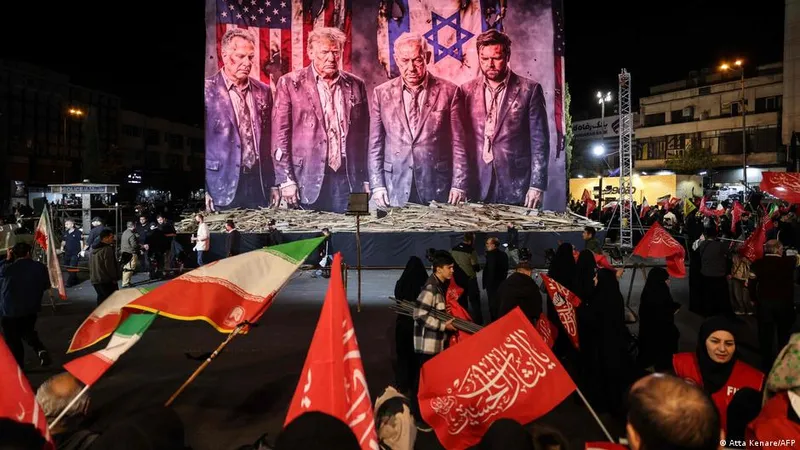
Opinions on Iran's next moves remain divided. Iranian officials have stated they're ready for any attack, with rhetoric suggesting they may target a wider range of targets than previously, including regional energy infrastructure and undersea telecommunications cabling.
Ross Harrison, a senior fellow at the Middle East Institute, warned that if Iran perceives an existential threat to its leadership, all bets are off. I think they will target differently in the Gulf states [this time]…so it really depends on how all this unfolds, he said during a virtual briefing.
Other experts believe Iran deliberately held off before the midterms to pressure Trump, and may now be more willing to negotiate a peace deal with the election concluded.
Gulf States Seek Alternatives
Gulf states, the primary targets of Iranian attacks, find themselves in a precarious position. We find ourselves drawn within a crisis that we worked diplomatically very hard to try to avert, said Anwar Gargash, a foreign policy adviser to UAE leadership, at the Manama Dialogue security conference. We are clearly seeking a political off-ramp.
Regional states are taking defensive measures while reassessing their defense partnerships with the US. There is widespread disappointment across the region with the US over the folly of the war, the erratic nature of Washington's military and diplomatic conduct, and its decision to prioritize Israel's defense over that of its Gulf partners, noted Hasan Alhasan of IISS.
Gulf states are expanding their outreach, with the UAE strengthening ties with Israel and Saudi Arabia entering the Mecca defense pact with Pakistan and Turkey. Andreas Krieg of King's College London argues that a lame-duck Trump will speed this move toward strategic autonomy.
Former US ambassador Ryan Crocker expressed skepticism about Gulf unity, citing well known differences between Saudi Arabia and the UAE and profound differences on relations with Israel. Gulf states may eventually develop some understanding with Iran, Harrison suggested, as they realize they probably can't buy their security only from Washington.
Related
