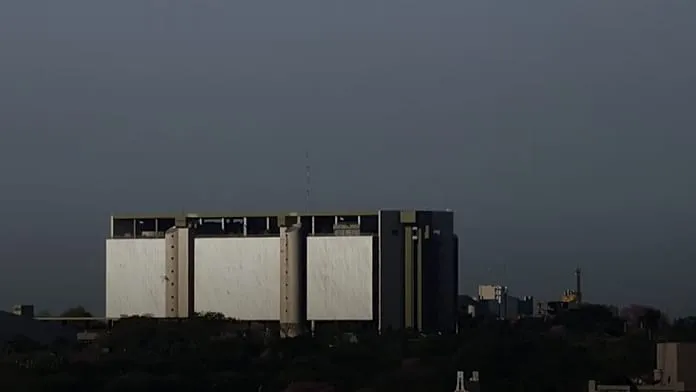
Ueno Bank liquidation triggers Paraguay political turmoil and impeachment move against Peña
Ueno Bank was placed under intervention and liquidation on November 3 after its solvency ratio collapsed below 50%, triggering political turmoil and an impeachment move against President Santiago Peña.
A sudden blank screen startled almost three million customers of Ueno Bank in the early hours of Tuesday November 3. At around 03:24, the app of the Paraguayan institution stopped displaying users' accounts and showed a single message: "We cannot display the balance". At the same time, the Banco Central del Paraguay announced the bank was placed under intervention and its winding-up process began.
The reason for this "resolution procedure" was a critical collapse in the bank's solvency ratio, which fell below 50%. The impact was immediate, triggering a political earthquake for the government of Santiago Peña. Crowds of angry users have gathered around the main headquarters in Asunción and the bank's 75 branches across the country, hoping to save their money.
Outside the premises, the scene has turned into one of extreme tension and despair. Some people, in tears, begged to withdraw their funds to pay for medicines for a gravely ill child. A construction worker was equally desperate when he realized that without access to his savings, he would not have money to buy food for his children that day.
Public funds at risk
The bank held around 850 million dollars in public resources, including funds of the Instituto de Previsión Social which support pensions and healthcare coverage for workers. The spectre of a corralito in the Argentine style immediately set alarm bells ringing among the population.
Who will answer for a lifetime of savings? Will there be impunity?
The authorities' attempts to calm tempers by reminding people that the law provides for a guarantee fund to reimburse each client up to 75 minimum wages (about 37,700 dollars) were in vain; suspicion and distrust had already completely taken over the streets.
Political fallout
The political opposition accuses the Banco Central del Paraguay leadership of being complicit by omission in the fraud, but the fatal blow is aimed directly at the head of state. At the request of 35 legislators, the Chamber of Deputies will meet in an extraordinary session to vote on whether to open impeachment proceedings against President Peña.
The process will only go ahead if it secures 53 votes in the lower house and, afterwards, the backing of two thirds of the Senate. The indictment accuses Peña of "poor performance of his duties", on the basis of serious charges ranging from conflict of interest and the alleged embezzlement of pension funds to the institutional shielding of the central bank.
In the middle of the storm, the president cancelled his entire official agenda on Wednesday and opted for silence until well into the afternoon, when he reappeared online to announce the departure of the head of the central bank and to demand that the courts establish responsibility.
Economic consequences
The judicial net closed in on Wednesday with the arrest of eight senior executives of the bank, among them its chief executive, Miguel Vázquez. At the same time, the knock-on effects quickly hit the real economy: the Association of Importers and Retailers warned of an immediate 35% plunge in sales at the country's major retailers.
With their money blocked and inaccessible, domestic consumption came to a sudden halt overnight. The bank, owned by the influential Grupo Vázquez, had been ubiquitous in the media and in the sponsorship of the country's most important football clubs, such as Cerro Porteño and Olimpia, as well as the emblematic Defensores del Chaco stadium.
Only a few days earlier, the bank had been trumpeting an ambitious capitalisation plan worth 100 million dollars. However, behind the advertising façade, the Superintendencia de Bancos uncovered a stark reality: the bank was unable to meet a compulsory reserve of 70 million dollars required by the central bank. The financial collapse was a matter of numbers; the subsequent explosion was pure political dynamite.
Related
