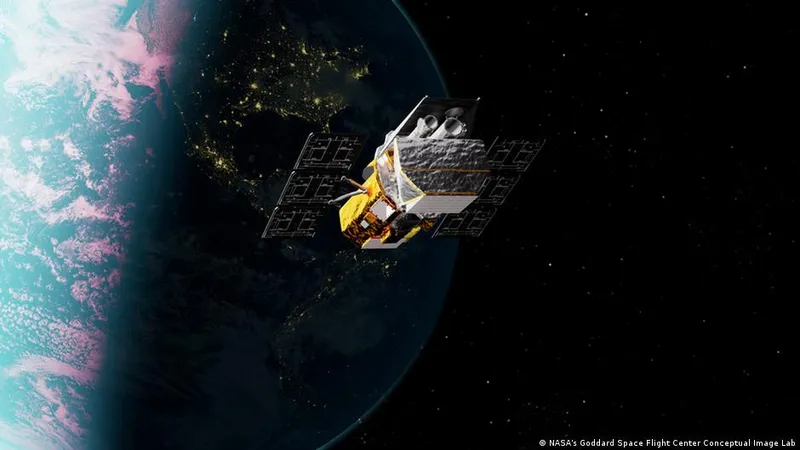
NASA's Swift space telescope plunges back to Earth in fiery demise
NASA's Swift space telescope crashed back to Earth on Wednesday, re-entering the atmosphere over North Sumatra, Indonesia, after a failed rescue mission.
The unmanned Neil Gehrels Swift Observatory, a $500 million satellite, re-entered Earth's atmosphere at 7.39 am EST on Wednesday, with most of the spacecraft expected to have burned up.
The observatory, which had been in orbit since 2004, was in good condition when it fell out of orbit, partly due to powerful geomagnetic storms set off by solar eruptions.
Mission details
Swift was equipped with three telescopes and was tasked with studying gamma ray bursts, the most powerful energy blasts in the universe.
Its mission lasted just a few days short of 22 years, spanning 11 times longer than its planned duration. It studied hundreds of supernova explosions, star-shredding black holes, and contributed to nearly 7,000 published scientific papers.
Failed rescue attempt
In July, NASA partnered with the private company Katalyst Space to launch a rescue mission using a three-armed robotic servicing spacecraft called LINK to raise the observatory's altitude.
The rescue vehicle plunged back to Earth in September, and Swift ceased operations on October 20. There were no immediate reports of damage on the ground.
Related
