Kosovo: Outrage as authorities accused of not helping femicide victim
Arlinda Zekaj, 49, was murdered in her home on October 25 despite repeatedly asking Kosovo police for protection against her husband and his family.
On October 25, 49-year-old Arlinda Zekaj was brutally murdered in her bedroom with an axe by her brother-in-law Albert Sylaj, despite repeatedly seeking police protection. Kosovo police had arrested her husband earlier that day after Zekaj reported him, but she also requested protection against her husband's family — a plea that was ignored. When officers dropped Zekaj home at 8:58 p.m., her killer was waiting. By 9:10 p.m., when police responded to an emergency call, they found only her body.
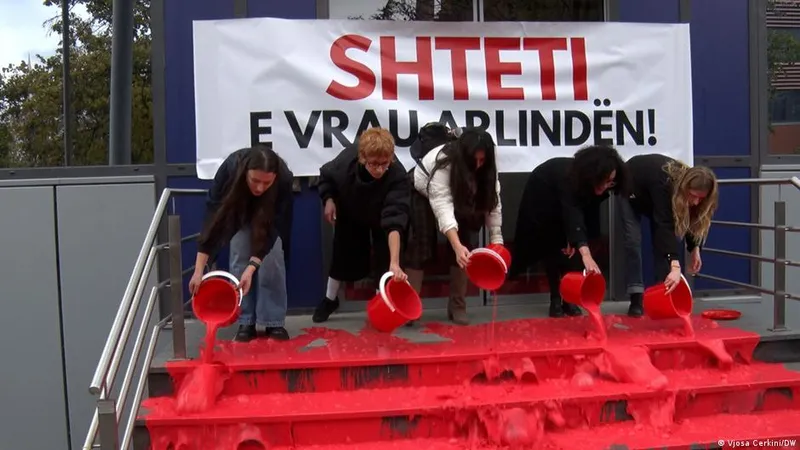
The murder in the village of Vitomirica, near Peja in western Kosovo, has sparked nationwide protests with thousands demonstrating across the country. Activists emptied red paint on government steps in Pristina, displaying banners reading "The state killed Arlinda" and "The government has blood on its hands."
Systemic Failure
Zekaj's death represents the eighth femicide in Kosovo this year and highlights a pattern of institutional failure. In the summer, she had obtained a protection order after reporting threats from her husband, yet authorities failed to enforce it properly. The order allowed her husband to remain in the house but required him to maintain distances of 2 meters indoors and 20 meters outdoors.
Three days before her murder, Zekaj reported that Sylaj had entered her home against her wishes and threatened her, saying "Leave or I'll kill you." Despite these documented threats, Sylaj was only questioned as a witness in the case against her husband. Since 2010, 55 women in Kosovo have been killed by partners or family members after years of documented abuse and ignored reports to authorities.
After every murder, we hear the same word: failure. 'The institutions have failed.' I disagree. Failure is when something happens once, when a system that normally works breaks down at one point. When the cases keep repeating themselves, when the victims are almost always women and each of them had previously knocked on the door of an institution, it is no longer a failure. It is a collapse of the state and society in relation to women in general.
Demands for Change
Protesters are demanding the resignation of Interior Minister Xhelal Svecla and Justice Minister Donika Gervalla, who was appointed national coordinator for protection against domestic violence in March. Both ministers have rejected calls to step down, though Prime Minister Albin Kurti acknowledged that "certain state institutions had failed."
In the aftermath of Zekaj's killing, several senior police officers from Peja and a prosecutor who handled her complaints have been suspended. However, activists say this is insufficient. "All those involved within the chain of responsibility must not only be removed from office but also criminally prosecuted for failing to fulfill their official duties," said Liridona Sijarina of Kosovo's Kolektivi Feminist.
Feminist activists are calling for the Interior Ministry to create a dedicated unit treating women's safety as a matter of national security, and for the government to prioritize social housing for domestic violence survivors. "The government now has the opportunity to show whether it truly takes women's lives seriously by clearly responding to our demands," Sijarina stated.
Related
