36 years later: Hungary opens Communist-era secret service files
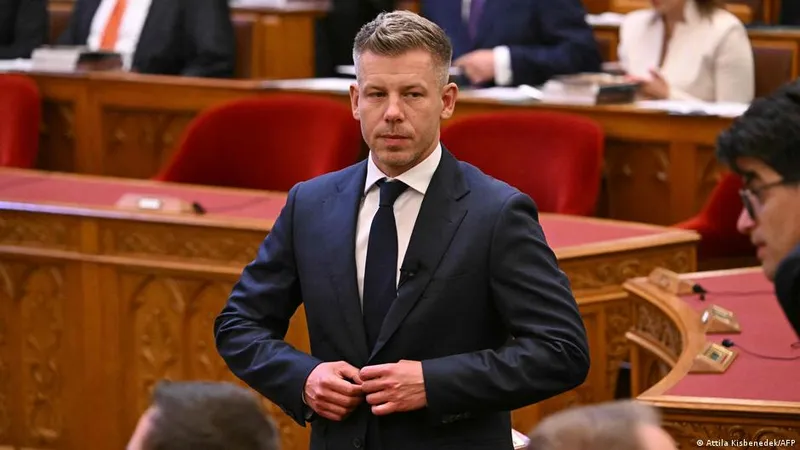
Hungary is releasing the names of up to 60,000 secret police informants, a historic move ordered by Prime Minister Peter Magyar's government to end decades of secrecy.
Hungary is making a historic shift in its approach to the Communist-era secret police, the Hungarian State Security (AVH). On November 4, the government of Prime Minister Peter Magyar will release the names of up to 60,000 informants, a decision that ends a 36-year delay.
The release includes databases containing all names and key information about the informants, along with a database on individuals recruited for state security work. Confidentiality provisions from the old 'agents law' have also been scaled back, allowing for significantly more files to be accessed in the future.
The move comes after decades of debate and opposition. Civil rights activists and smaller political parties have long called for the files' release, but it was blocked by the long-ruling Fidesz party, which voted more than 30 times against such plans since 2010.
Decades of debate and obstruction
After the fall of the Berlin Wall in 1989, the demand for transparency grew, but it faced significant resistance. Hungary's first post-Communist prime minister, Jozsef Antall, rejected the idea of a full release, a stance later echoed by Viktor Orban's Fidesz party.
A partial release occurred in the 1990s with the 'agents law' of 1994, which required background checks for government officials and allowed citizens to view their own files. However, the law's broad provisions allowed the Ministry of Interior to prevent the transfer of files to the Historical Archives of the Hungarian State Security (ABTL) if it deemed it a national security risk.
This selective release not only hindered society's understanding of the AVH but also allowed files to be exploited in political power struggles. A notable example involved former Prime Minister Peter Medgyessy, who was exposed in 2002 for having worked as a Communist-era secret agent by the Fidesz-affiliated daily Magyar Nemzet.
Political fallout expected
The upcoming publication is expected to have major political consequences. The ABTL director, Bendeguz Gergo Cseh, has cautioned that the documents are not always reliable, noting that many were incomplete and some had been destroyed.
Historian Janos M. Rainer, an expert on Hungary's dictatorship, believes the release is more of a symbolic gesture than a substantive reckoning, arguing it would have made more sense right after the regime's fall.
You can't believe everything the state security agencies and their files claim.
In contrast, historian Krisztian Ungvary welcomes the move, stating that it will allow historians to pursue new research and society to engage in fresh debates. He believes Hungary will benefit from such reflection, as societal lies inevitably strain the relationship with politics.
It will allow historians to pursue new research and society to engage in fresh debates.
A reckoning with the past
For Prime Minister Magyar, the release is a critical step in coming to terms with the past. He has made the idea of historical reckoning a central theme of his administration.
The decision to amend the law in mid-September was announced on Facebook by Magyar, who noted that Fidesz had not supported the motion. He alluded to the fact that many prominent figures in Fidesz' ranks and in Orban's inner circle were members of the Communist party or secret police.
One of the most well-known figures is Jozsef Horvath, a former full-time employee of the AVH department responsible for suppressing domestic opposition. Under Orban, Horvath worked as an intelligence officer and security advisor, and in 2024, he became the research director of Orban's Sovereignty Protection Office.
The Sovereignty Protection Office, which exposed supposed enemies of the Orban regime as 'foreign agents,' is now led by a former secret police officer. The release of the agent files will likely intensify scrutiny of such figures and the political culture they represent.
Related
