Kosovo: Protests and outrage after a woman was killed despite repeatedly seeking assistance from the authorities
Arlinda Zekaj was murdered in her home on October 25 after repeatedly seeking police protection against her husband and his family. The 49-year-old woman's death sparked nationwide protests accusing authorities of failing to prevent the femicide.
On October 25, 49-year-old Arlinda Zekaj was brutally murdered in her bedroom with an axe in the village of Vitomirica near Peja, western Kosovo.
This was the eighth femicide in Kosovo this year and one of the most brutal in recent years. The murder has sparked numerous public protests and demonstrations involving thousands of people across the country, with protesters accusing the state of failing to protect Zekaj despite her repeated pleas for help.
Repeated warnings ignored
Zekaj had been seeking police protection for months. As early as the summer, she reported her husband for making threats against her. A court in Peja issued a protection order granting her temporary custody of their son and the right to remain in the family home, while requiring her husband to maintain distances of 2 meters indoors and 20 meters outdoors.
Despite this protection, Zekaj continued to report threats, particularly from her brother-in-law Albert Sylaj. Three days before her murder, she reported that Sylaj had entered her home against her wishes and threatened her with the words: "Leave or I'll kill you." Despite these warnings, Sylaj was only questioned as a witness in the case against Zekaj's husband.
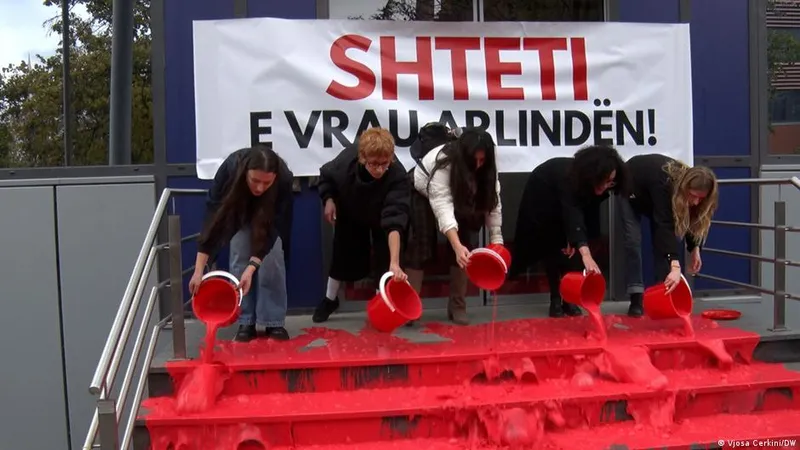
The state killed Arlinda.
Nationwide protests erupt
The first protest took place on October 26, when feminists emptied buckets of red paint on the steps outside Kosovo's government building in Pristina. In the following days, thousands of people demonstrated across the country, carrying photographs of murdered women and chanting "The government has blood on its hands."
Protesters are demanding criminal charges against police officers and prosecutors responsible for handling Zekaj's case, as well as the resignation of Interior Minister Xhelal Svecla and Justice Minister Donika Gervalla, who was appointed national coordinator for protection against domestic violence in March. Both ministers have refused to step down.
Prime Minister Albin Kurti acknowledged that Kosovo state institutions had "failed" in this case, though he stopped short of accepting responsibility for the systemic issues that led to Zekaj's death.
Systemic failure identified
Since 2010, 55 women in Kosovo have been killed by partners or family members, often after years of documented abuse and ignored complaints. While Kosovo has adopted laws including the possibility of life sentences for perpetrators in femicide cases, activists argue that authorities have failed to implement these measures consistently.
Lawyer Njomeza Zejnullahu wrote that after every murder, we hear the same word: failure. I disagree. When the cases keep repeating themselves, when the victims are almost always women and each of them had previously knocked on the door of an institution, it is no longer a failure. It is a collapse of the state and society in relation to women in general.
In response to the killing, several senior police officers from Peja and a prosecutor who handled Zekaj's complaints have been suspended. However, activists argue this is insufficient and demand criminal prosecution for all officials who failed in their duties.
Demands for change
Feminist activist Liridona Sijarina of Kosovo's Kolektivi Feminist called for "all those involved within the chain of responsibility" to be removed from office and criminally prosecuted, including police officers, prosecutors, judges, the Mayor of Peja, and government ministers.
Activists are also demanding the creation of a dedicated police unit treating women's safety as a matter of national security and prioritizing femicide prevention. They want the government to make affordable social housing a priority, ensuring women who have experienced domestic violence are eligible.
Sijarina emphasized that "the government now has the opportunity to show whether it truly takes women's lives seriously by clearly responding to our demands." The protests continue as Kosovo grapples with a pattern of institutional failure in protecting women from domestic violence.
Related
