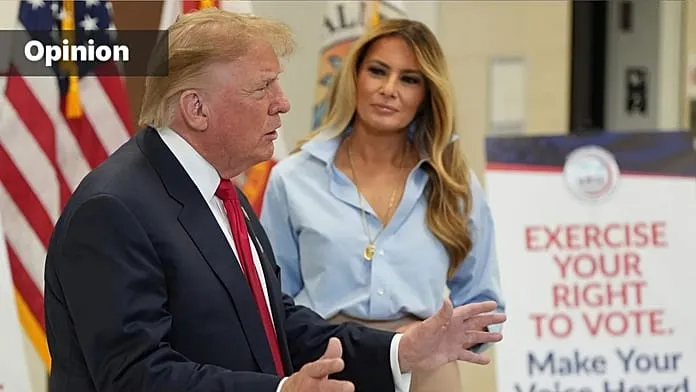
After US midterms, a weakened Trump may pose a greater threat to Europe
The US midterm elections have curbed Donald Trump's domestic power, but this may actually increase his willingness to take risks in foreign policy, potentially making the next two years even more difficult for Europe.
The midterm elections represent a domestic reckoning for Trump, with a clear swing towards the Democrats in both chambers of Congress. This election was effectively a referendum on his second term, addressing rising living costs, the consequences of his trade policy, and the ongoing Iran war.
However, anyone concluding that Trump will now be politically paralyzed could be mistaken. His weakening at home may actually increase his willingness to take risks in foreign policy, where presidents traditionally have greater freedom to act.
Tariff weapon hits Europe first
Trump primarily views tariffs not as economic instruments but as tools of political pressure. Europe has already experienced this, with a tariff cap of 15% applying to most European exports to the US, while special burdens remain on steel and aluminum.
Trump raised the burden on European cars and trucks to 25% and openly linked his policy to the demand that companies should produce in the United States to avoid tariffs.
Audi's response exemplifies this strategy, announcing $4 billion in investments for a US plant after Trump's pressure. Gernot Döllner, an Audi executive, even appeared with Trump at a campaign rally in Georgia shortly before the midterms.
Ukraine and NATO as leverage
The geopolitical dimension poses even greater challenges. Washington can use its relationship with Ukraine to impose conditions on European allies without needing major domestic legislative processes. Trump has repeatedly questioned US support for NATO, demanding US control over Greenland, a territory belonging to NATO ally Denmark.
This fundamental difference in how the alliance is understood—Europe sees NATO as a community of values and security, while Trump views it as transactional deals—creates significant tension.
Iran: The most dangerous way forward
The Iran conflict represents the most dangerous potential flashpoint. More than six months after the war began, there is no lasting settlement, and Iran has demonstrated how vulnerable the global economy is at the Strait of Hormuz.
A weakened president might feel compelled to demonstrate foreign policy strength more aggressively, potentially escalating the conflict. Europe would bear the consequences through higher energy costs, additional refugee movements, and further weakening of international non-proliferation regimes.
Trump against the EU
Trump's political circle is highly skeptical of Europe's supranational integration, meaning Washington will likely cultivate bilateral relations with governments and parties that want to push back powers held by Brussels. A divided EU is easier to handle for a transactional US power strategy than a united economic area with 450 million inhabitants.
US Vice President JD Vance and Secretary of State Marco Rubio have already offered a foretaste of this divide et impera approach, setting the stage for the 2028 presidential race. The midterms open the battle for interpretive dominance within the Republican Party, with Vance representing the MAGA continuation and Rubio positioning himself as the more institutional Republican.
Related

